Cambodia - Leapfrogging into the future
The consequences of history are often unpredictable. The genocidal regime of the Khmer Rouge which engulfed Cambodia in the 1970s, among many other acts of destruction, blew up the headquarters of the National Bank, and abolished money. That’s correct: no banking, no money, with bartered transactions sometimes conducted in grains of rice.
It wasn’t until the late 1990s that a degree of normalcy returned to the country. However - and here’s where unpredicted consequences come in - the destruction of the banking and monetary system meant that to some extent Cambodia was starting with a blank sheet.
The story from many financial markets across the world is of innovation being held back by conservative elements, whereas in Cambodia, not so much. In effect the country has leapfrogged into the digital future, short-circuiting a frequent tale told by European Fintechers: of the initial resistance they faced from Central Banks and other financial institutions. Such scenarios saw the need to band together in associations speaking up for the then emergent Fintech industry.
The origins of CAFT
Weena Llona is Executive Director of the Cambodian Association of Finance and Technology (CAFT) and is well-placed to give an overview of Fintech in the country. CAFT ‘Welcomes the opportunity to connect finance and technology with the Cambodian community of entrepreneurs, business owners, managers, lawyers, community leaders and many more.’ The association grew out of a coalition of Cambodia’s leading payment companies, but these days is more broad-based. As of mid-2026 there are around 35 corporate members, including banks and tech companies. However Weena says, “Fintech is not yet diverse,” and payment companies and banking still form the backbone of membership.
 Weena Llona
Although settled in Cambodia, Weena brings something of an outsider’s view to the scene, having been born and raised in the Philippines and developed a background in business process outsourcing, where she built, grew and scaled operations from the ground up. As is so often the case, things took a different turn when she was offered three days of consultancy work in Cambodia… which turned into six months… then to the point where she grew to love the country and decided to stay.
Developing AI in Cambodia
A somewhat similar story applies to a classically-trained percussionist from a French conservatoire, who became an entrepreneur heading up a ground-breaking Cambodian AI business. Kevin Sabbe has come a long way, and these days his rhythm work is confined to an electronic drum kit at home, but the spark for his interest in computing dates back to age six. His grandmother gave him her used computer with Windows 3.11 installed (he even shares a screenshot of that wonderfully old-fashioned looking design), and from there on there was no stopping the budding gamer, then coder. “It was like magic! So, since I was a kid, I’ve always loved technology, and science fiction.”
 Kevin Sabbe
SKAI’s the limit
Kevin started his company SKAI (Sovereign Khmer AI) in January 2025, after living for some 15 years in Cambodia, working in tech and as a university lecturer - something that was to prove valuable when he started recruiting for SKAI and had over 300 of the brightest ex-students to choose from. Business was originally done mainly with French and Swiss companies, but is rapidly expanding across Europe and the ASEAN. SKAI’s core work covers design, web design, web development, mobile apps, AI tools, automations and digital products. There are also training activities for client employees in efficient AI use and safety.
So it’s all AI-based? Kevin shakes his head, “No, no, no! We use AI when there is a purpose for it. For example, if all we need is a calculator, we won’t include AI. It depends if there is a real need. We use AI when it makes sense.”
Starting in mid-2026, SKAI is developing its own AI product, Sorya AI. It’s inspired by ChatGPT and is a Large Language Model specifically for the Cambodian market, and is the first of its kind in the country. The model is being trained on Khmer texts, as well as Cambodian culture. “One of the features is that you can scan a document in Khmer, and it will write down all the Khmer texts on a specific page and keep the layout of the document, but let you edit it.” With over 90% of Cambodia’s population of 16 million people being Khmer speakers (plus more in Thailand and Vietnam), the potential number of users is considerable.

Tailored to Cambodia
There are very specific rules of grammar particular to Cambodia, plus Kevin gives an example of the cultural scope of Sorya AI, “Based on who you are - male, female, your rank, your family, if you are a parent, a teacher or so on, the way you’re going to talk will be different. So our UI / UX allows you to specify to the AI very quickly what the context is, to provide a better experience.” He cites the word ‘You’, which can be rendered in numerous different ways in Khmer, depending on the status of the recipient. “If you translate a 10-page document or write an email, by just clicking one button to select who is sender and who is a receiver, immediately the AI adapts to the correct context.” Kevin remarks that in terms of pure intelligence and reasoning, as yet the product is, “Nothing amazing”. However the big focus is on developing the user experience.
To date there is no industry leader for ChatGPT-like services in Cambodia, but rather a lot of AI tools that are used ‘here and there.’ The goal for SKAI’s initiative is to create a platform for two distinct user groups, the first being the general public, who Kevin acknowledges are unlikely to want to pay for the service. There is more scope for B2B applications, including lawyers or doctors who are unwilling to submit data to AIs hosted in the USA. In future it’s possible that SKAI will run the AI directly into a client office, or host on their behalf. Eventually banking and the insurance industries could use the service on-premise… but not yet. Sorya, by the way, is Khmer for ‘sunshine’ or ‘radiance’.
Data rich Cambodia
Sokhna Vor has a degree in economics, and is a data scientist and educator who travelled from his native Cambodia to study and work in the USA, Singapore and China before returning home to start his own AI company DataTicon, and the DataU Academy. Dataticon describes itself as, ‘the leading big data technology and AI development firm in Southeast Asia’ … helping ‘forward-thinking organizations around consulting, AI+data and software solutions in Banking, Fintech, Internet, Ecommerce, IoT, Blockchain, FMCG, Telecom and other industries to bring values for businesses.’ That’s a lot of offerings.
And the DataU Academy ‘Trains your future data and tech leaders as human capital development for forward-thinking organizations in the 21st century workplace.’ Note that ‘your’ references other companies in Cambodia who will benefit from the influx of trained tech people.
While Sokhna gained huge experience with Silicon Valley startups, and working in New York, the point of starting the educational initiative is that other young Cambodians should be able to receive grounding in tech and business in their own country.
 Sokhna Vor
More scale and impact on the way
For DataU Academy Cambodia, Sokhna’s intent was, “For people to acquire high value skills because I didn't think it should be necessary to fly to the USA or other far-away places.” His ambition was to ‘bridge the gap’ and to enable the next generation to study at home, but be able to operate effectively in a global market. “I believed it was possible, and we’ve done that, with a lot more scale and impact to come.”
Sokhna agrees with Weena Llona that the destruction of the financial system in the Civil War has to some extent benefitted the tech, banking and Fintech industries, because there was so little to hold back development. As a result he sees Cambodia as steadily moving through traditional economic development based around agriculture and manufacturing to a high value economy, in line with government goals. The plan is to reach upper middle-income status by 2030, and high income developed nation status by 2050. DataTicon and DataU Academy share some key touchpoints with the National plan.

Building the data infrastructure
Sokhna outlines DataTicon’s offering: “I came back here to make these new kinds of technology available to Cambodian enterprises so that they can improve productivity and business efficiency, by implementing various AI and data solutions. Sometimes there can be great friction in the decision-making process to drive value. So we build the data infrastructure to make it ready for AI to utilise that data. Primarily our clients are those with a lot of data, such as financial services and banking - from microfinance to large enterprises in financial services. We also support international NGOs on some digital transformation activities, and work with ministries and the government to improve the delivery of digital public services.”
One significant project is NISP, The National Strategic Plan of Identification, with a long-term vision of every Cambodian having a legal identity. This involves ‘building a modern, permanent, universal civil registration system (CRVS) that will generate reliable vital statistics and an integrated population identification system (IPIS).’ That’s a lot of big data wrangling that a company like DataTicon can help with.

There have also been rapid changes in the way Cambodian citizens handle money. In the recent past, sending money from the big city to help family members in the provinces was time consuming and costly. With the advent of the Bakong national mobile payment and digital currency system, the general population has increasing access to modern, sophisticated financial services.
Incidentally, for trivia fans, Bakong is the 9th century CE temple mountain situated in Angkor.
Forward thinking and radical offerings
From a native Cambodian to another person who moved to Cambodia for a limited period of time. Zokhir Rasulov, Executive Vice President and Chief Digital Officer of ABA Bank, Cambodia tells an energetic story about the growth of the bank, and his own involvement in it. ABA Bank has been through a massive digital transformation in the last decade, setting the standards for the whole Cambodian financial industry with forward thinking and radical offerings. But to explain the background, Zokhir starts with his personal journey, in the context of Cambodia’s uniqueness in the world.
He’s from Uzbekistan, and around 2009 was invited by an ex-colleague from Kazakhstan to join with marketing activities for the newish bank. By the way, that ex-colleague Madi Akmambet is now Executive Director of ABA Bank.
 Zokhir Rasulov
Sprucing up the business
Zokhir describes a completely different Cambodia back then to the current rapidly advancing economy. The turmoil of the 1970s had left the country poor, the infrastructure undeveloped, and at the time the Advanced Bank of Asia (ABA) had only two branches. However in 2009 the upgrading process began, which is when Zokhir got the call to help with rebranding, planning, and a marketing campaign.
Work completed, he returned to Uzbekistan to fulfill other commitments, but by 2012 was re-engaged in the role of Chief Marketing Officer at ABA, with the goal of staying in Cambodia for a couple of years, “To enhance and grow the bank, and to make it attractive for selling to a new investor.”
Well, if you want to make a business ready for sale, sometimes it needs ‘sprucing up’, so Zokhir and his colleagues started examining how to make ABA Bank stand out from the competition, and produce added value through processes and technologies.
One approach was to experience the customer-unfriendly banking practices of the time. Opening hours of competitor branches were typically from 8 in the morning to 4 in the afternoon, with no weekend working at all. “When I went to the bank, considering I had to take the car, drive to the bank, find a parking slot, stand in a queue, wait to be served and then return to the office… I’d spent two hours.” This was also the experience of the average Cambodian, or at least those with a bank account.
Street surveys of thousands of people also revealed why they chose their preferred bank. Many said it was from recommendations by friends and relatives, or the perceived reputation of shareholders and investors. Proximity to a bank branch was also important, but very few people were looking for a bank that was always available to them.

Going straight to mobile
ABA Bank was already investing in new technologies, and had introduced internet banking in 2009, although access depended on laptop or desktop computers, which were beyond the means of most Cambodians. In 2012, the bank expanded its ATM network and invested in its core banking infrastructure. Even round-the-clock access to cash through ATMs was still a novelty in the market.
Alongside these investments, ABA was developing its ability to understand and engage with customers. As Chief Marketing Officer, Zokhir needed timely data to assess customer engagement, conversion rates and the effectiveness of marketing campaigns. However getting the data could take weeks, making it difficult to analyse results and act quickly.
In 2013, the Marketing team hired its first developer. Working with the IT team, they built the integrations needed to collect real time raw data and turn it into usable information, presented through clear, visual dashboards. This gave Marketing faster access to the insights needed to guide its activities - an early step towards automating and digitising processes.
 The ABA office environment
By 2014, attention was turning to a broader opportunity: building a mobile banking app to provide 24/7 access to customers. Terms such as ‘startup’, ‘fintech’ and ‘digital’ were increasingly prominent around the world, and Zokhir and his colleagues were inspired by the rapid development and radically different approach of these businesses. They saw how technology could transform traditional processes, making things simpler, faster and easier for customers. The team looked to Alipay in China and Tinkoff Bank and Tochka Bank in Russia for inspiration, particularly with their focus on building services and payment ecosystems around customer needs.
In Cambodia, feature phones from brands such as Nokia still dominated, while smartphones were gradually getting uptake from wealthier consumers. The team saw an opportunity for much of the population to bypass computers altogether and access their bank directly through a mobile phone. The conditions for ABA’s move into mobile banking were coming together. The top management team had mixed opinions about whether to pursue this direction. Supporters saw the potential of digital banking, while others questioned whether smartphones would become affordable and used widely enough. Would the general population develop the digital and financial literacy needed to download a banking app and use it confidently?
Nevertheless, by May 2015 the first app for Android devices was launched in Cambodia by ABA Bank, and then Zokhir and his colleagues watched… and waited.
 ABA colleagues at work
The one source… for everything
The first month saw 103 active mobile users, which some of the pessimists on the team were actually quite impressed by. The following month, mainly through word of mouth, user numbers were up to 1,000. A year later there were 36,000 users and growth has continued exponentially. From the initial use of Android phones, the secondary market for iPhones was also growing rapidly, bringing the devices more and more within reach. “Cambodia is similar to China in bypassing conventional phones and computers, and jumping straight to mobile.” TVs weren’t widespread, so mobile was also the go-to for movies and entertainment along with the rise of Social Media. Ahead of many other parts of the world, the smartphone in Cambodia became the source of news, gaming, entertainment… and banking.
In 2016, following the successful steps into mobile banking, Zokhir was offered to lead the bank’s broader digital transformation. He took on the new role of Chief Digital Officer, steering the bank's strategy as mobile and digital payments adoption accelerated.
Dollarization, and de-dollarization
Let’s return to Weena Llona and the benefits of starting from an almost blank sheet in financial technology. One of the most significant steps came with the introduction of the Bakong launched in 2020 by the National Bank of Cambodia (NBC) on blockchain technology built with the Japanese Fintech Soramitsu. Bakong enables peer-to-peer transfers, mobile transactions and e-wallet services, and operates in both the Cambodian Riel (KHR), and US Dollar, forming a dual-currency system. Broadly, in the cities it’s KHR for smaller daily purchases and change, and USD for larger costs such as rent, cars and property, while in the provinces the Riel is used for almost everything. Either way, cashless payment is accepted.
As with many ASEAN countries, “QR codes are everywhere. Since 2022 the NBC’s national QR standard, KHQR, lets one code work with any bank or wallet app, and even most street vendors display one,” says Weena. “Visitors are covered too: from 2024 the Bakong Tourist app lets them pay like locals.”
Dollarization took hold in the early 1990s, when the UN mission (UNTAC) flooded the country with dollars. Weena calls it ‘a double-edged sword’ as it attracts investment but limits the NBC’s control over monetary policy. Hence de-dollarization is a stated aim, with the National Bank promoting the Riel, and the Digital Economy and Society Policy Framework 2021–2035 driving digitalization. Weena says, “With around 83% of money still in dollars, it’s a long game.” Across government, banking, regulators and Fintechs there is strong alignment about the financial future for Cambodia.

Rapid and comprehensive digitalization
One factor assisting this is the establishment of CamDX - the Cambodia Data Exchange connecting government and private sector IT - modelled on digital nations such as Estonia, and in operation since 2020. CamDX is the country’s decentralized data exchange platform to securely connect government and private sector organizations, essentially the data backbone for the digitalization of Cambodia across all aspects of government, business, and civil society.
And on the subject of society, presumably such a youthful population means that many people are tech-savvy? While Weena agrees that there’s a lot of IT and developer talent among younger people, a greater part of the population is still not digitally or financially literate. “Everyone knows how to scan a QR, but how to protect yourself, and the basics are not fully understood by everyone. At CAFT we are discussing the national financial inclusion strategy, and Financial and digital literacy are priority subjects.”
Ever more integration needed
At DataTicon, Sokhna Vor summarizes his client listing as including financial services, real estate, telcos and government education, adding that with such a broad range, the company is sector agnostic. If an organization has a lot of data to juggle and mine, then Sokhna and his teams will help monetize it. “Pursuing efficiency is massive for an economy the size of Cambodia,” but he says the financial system still needs more integration, especially between banks.
AI is enabling rapid access for businesses to use intelligent tools, and DataTicon helps non-technical employees to easily drill down into and leverage financial, telco and business data. Systems that were complex to build are becoming ever more feasible through AI, and while training employees might previously have taken several months, using Power BI or Tableau, “It’s pretty much that anyone can access a dashboard and intelligence in a few minutes, with our own Aicser GenBI platform. We’ve open sourced it while supporting Sovereign AI as a governed risk and regulatory compliance solution for mid-to-large enterprises.”
 DataU attendees
The flavor of the future
Speaking of user interfaces, what’s Sokhna’s take on UI-UX, and is the Cambodian ‘flavor’ any different to elsewhere? He points out that it’s paramount to have good UI-UX for any solution anywhere, but adds that with Cambodian digital literacy still not high, simple UI-UX tends to work best, and has to be very user-friendly. Not only is Cambodia a dual economy with the Riel and the US Dollar, it’s also dual language, with English used in business, but not always widely understood. Lack of developed infrastructure in the provinces also means that the internet is often patchy or slow, so that apps have to be easy and quick to use.
However things are clearly improving in the financial sphere in Cambodia, and Sokhna expresses optimism, “We are living through exciting times. There's a lot of challenges happening across the globe, and also in Cambodia, such as gas prices, global conflict, and economic uncertainty. But despite that we are committed to digitizing our businesses and processes so that we can be stronger.”
Broadcasting the initiatives
Weena Llona says that CAFT is active in education initiatives, working alongside the banks, especially in spreading awareness of scamming, and how to avoid it. She mentions that in terms of communication the overwhelmingly common channel is Telegram, so that’s what is primarily used to send out alerts about scam issues. Contracts and other sensitive documents might be exchanged on the channel too.
Facebook is popular so it’s also being used by CAFT and government agencies to reach the general population, and help catch up with the educational lag.
 A CAFT panel meeting
Looking beyond Cambodia
While there is a strong CAFT focus on Cambodian issues, and co-operation with the National Bank on financial digitalization, the association is also outward-looking, especially across ASEAN. The promotion of Cambodian digitalisation has been a big story told at international events, where the development of the Bakong is of great interest. The Cambodian use-case is a valuable study for others wishing to learn from and replicate the system, especially the QR element running on blockchain. And it’s going regional: through KHQR, Bakong now links with QR systems in much of ASEAN, plus China and South Korea, so visitors can pay with their home apps. Weena has told the story herself on stages across Asia, Europe and Africa.
Opportunities for saving and investment
Savings is a relatively new area for Cambodia, with many people just starting to dip their toes into savings and investment, so there are also new campaigns to introduce this to show that, ‘Banks are not the enemy!’ Looking back at her own childhood in the Philippines, Weena mentions that her parents had already started a savings account for her in her infancy. In contrast it was only around 2023 that a similar initiative was launched in Cambodia. Culturally, savings have been the province of the small proportion of wealthy people in Cambodia, who didn’t actually keep their wealth within the country, but moved it to places such as Hong Kong and Singapore. That is changing as Cambodian banking, savings and investment opportunities grow.

The DQD portfolio
So far we’ve seen a country long overlooked in favour of faster moving ‘superstar’ countries in the ASEAN. However Weena says there is a lot of optimism about the direction of the Cambodian economy, and in particular the digitalisation initiatives.
She’s not merely an observer of the scene, but is also an entrepreneur across a dizzying range of business activities. She reels off: Food & Beverage and Hospitality with three Phnom Penh restaurants; a Microbrewery and Distillery - soon to produce gin and vodka; a Construction company; a Meat-importation business; and a skim coat factory plus distribution for a premier Norwegian paint brand. Oh, and there’s a tech arm as well, with two companies: Inference Tech Solution, covering software development, IT consulting, data hosting, design and UX-UI development, and Wave Smart System, which supplies, installs and maintains security, smart-building and electronic systems.
The umbrella organization for all of this is DQD group, of which Weena is the cofounder and COO. DQD grew out of a consulting company founded by Weena and her Czech, Uzbek and Cambodian partners in 2019. The initialised name stands for ‘Dicendum Quod Diversitas’ which Latin scholars will recognise as, ‘It must be said that Diversity…’ For DQD, diversity is the business model: a multinational team, and businesses across consulting, technology, manufacturing and hospitality that support each other. The group also helps foreign investors enter Cambodia properly, advises local tech start-ups, and makes products that were previously imported, creating local jobs and skills.
No legacy stickiness
Zokhir Rasulov returns to the theme of the turbulence of civil war, which took such a terrible toll on the population and, “Set the country back fifty or so years.” The loss of so many people from that generation left a lasting impact on education and the development of professional expertise, creating a significant challenge in the early days of digitalisation.
At the same time this meant there was no ‘legacy stickiness’ and people were ready to accept new offerings because there was little to compare them to. “That gave us more confidence in developing and introducing new services and functions, through understanding the market culture and daily interactions.”
So rather than responding solely to direct customer requests, ABA Bank was observing and analysing the market to decide what to offer next. This included research in rural areas to study trading patterns and travel. One initiative was a debit card, which found little favour as merchants faced transaction fees of up to 3% charged by the payment schemes, and often passed these costs on to customers. Cash, for the moment, remained the choice of most of the public.
The QR alternative
During a visit to China in 2015, Zokhir and fellow members of ABA’s management team were inspired by how widely QR payments were used, so in 2018 the bank introduced ABA Pay, a QR-based payment service. This was free for both merchants and customers, making it an attractive alternative to cash.
The same year, ABA introduced Cambodia’s first electronic Know Your Customer (eKYC) service, allowing people to download ABA Mobile, verify their identity and open their first ABA bank account remotely. These services proved valuable when Covid-19 brought movement restrictions and curfews. Demand from merchants for ABA QR payments skyrocketed, while remote account opening helped millions of Cambodians access banking services directly from their phones.
Nowadays, ‘to ABA’ has become a verb, meaning to transfer or pay money electronically, just as ‘to Google’ is a catchall term for using a search engine. “To ABA means to use QR, even though it may not be through ABA Bank,” says Zokhir.
Another consequence of e-KYC was the further ‘democratization’ of banking because opening an account can be done in the customer’s own time and at their own pace. Zokhir recalls taking a ‘tuktuk’ ride (a motorized rickshaw) to his ABA office and chatting with the driver. The man commented that banks were only for rich people and he could never imagine himself entering one, or dealing with the people who worked there. Zokhir set him straight on this, and the advent of easy mobile onboarding has made a huge difference to many Cambodians who were shy of engaging with a bank at branch level.
Already on for Mars
Over the last three years the ABA app has headed towards SuperApp status, and in addition to regular banking processes allows purchases such as movie tickets, booking a massage, a dentist… and other useful consumer activities. What is still exotic in other markets is now very well accepted in Cambodia.
So it’s all been a steady upward curve for ABA’s Chief Digital Officer Zokhir Rasulov? Well, he does admit to ‘one failure’, although even this was turned to a positive. Scammers were targeting customers still unfamiliar with digital banking, so to address this ABA introduced an additional layer of security to ABA Mobile in early 2018, requiring customers to set up a ‘secret word’. The problem was that many Cambodian customers had little experience of using passwords. Requirements to use upper and lower case letters and special characters made things even more complicated. People forgot their secret word and were then locked out of the app, however, this spurred ABA to urgently develop a facial biometric authentication feature. This initiative later laid the foundation for the complete eKYC solution.
Zokhir notes that Cambodia’s leading banks now offer a broad range of modern digital services, many comparable to those available in more developed markets.
Since becoming ABA’s sole shareholder in 2019, the National Bank of Canada has also provided opportunities to exchange ideas and experiences. Colleagues in Canada have noted that some of ABA’s innovations would be difficult to introduce in their market, where customer habits and older banking systems can slow the adoption of new services. As one light-hearted comment to Zokhir put it: ‘You guys are already on Mars!’
Becoming the AI-first tech partner
In case we get too excited about the imminent release of Sorya AI, Kevin Sabbe is resolute that the work SKAI is doing is to, "Show our capabilities and maybe charm some big company that can trust us to build something serious for them.” At the same time the team continues their everyday work, ‘To build AI Tech and provide talent, and become the AI-first tech partner.” He adds that building scalable digital products comes with a price tag of about one third of European costs, but makes the point that SKAI also offers one of the highest salaries in Cambodia. His goal when setting up SKAI was to achieve three things that he himself would love in a business: “A good salary, no micro management, and as few meetings as possible. It’s working because we have a lot of good talent, with a low staff turnover.”
 Some of the SKAI team
The European and Asian experiences
Comparing his experience in France, and now as a Cambodian resident, Kevin sees his homeland as strangling creativity with too much restrictive bureaucracy. In Cambodia it’s quicker and easier to build a Fintech business, and he praises the transformation of ABA which has many features still not adopted by his own French bank. He gives as an example the ability to easily transfer money with ABA through his phone to an ATM, where with a 6-digit PIN a recipient can make a cash withdrawal, for free. “These things are very helpful in daily life, but in France they don't have such things.”
He adds that while the initial business for SKAI was with Francophone companies, currently the client base is roughly 60% in France and Switzerland; 20% in the Middle East, plus Australia and Singapore; with the remaining 20% being the home market in Cambodia
Scary, but in a good way
With SKAI gaining an ever-greater footprint in the world, is there a risk that the company’s Sorya AI might become subject to that sincerest form of flattery, copying? Kevin seems relaxed at the prospect, “I’m not very concerned because the best thing we can get from this project is to gain credit that we are actually advanced in this country. If people copy us it’s a signal that we are doing things that are interesting. The worst would be if we were totally ignored by everyone, and nobody cared about our products.” He reflects, “We want to see if people are interested in our products and receive feedback that it makes sense. That’s why at the moment I'm a bit anxious, a bit stressed, because it’s like you have a baby and now you show it to the world, and that’s scary sometimes… But in a good way!”
Which in some ways might summarize the whole excitement and vibrancy of the Cambodian Fintech scene, as it leapfrogs into the future.
About the authors
Harlan Cockburn is a writer and director based in Budapest, Hungary.
Related case studies
Prefixbox
Prefixbox is a Hungarian e-commerce scaleup. We helped them design an AI agent that gives more accurate product recommendations to shoppers with generative AI.

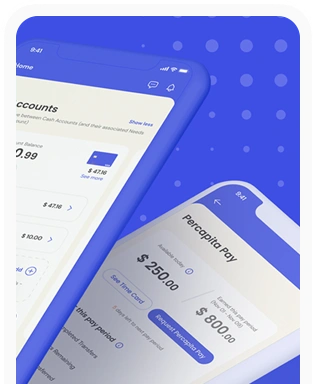
Percapita
We designed a full-fledged application for simplifying everyday finances.
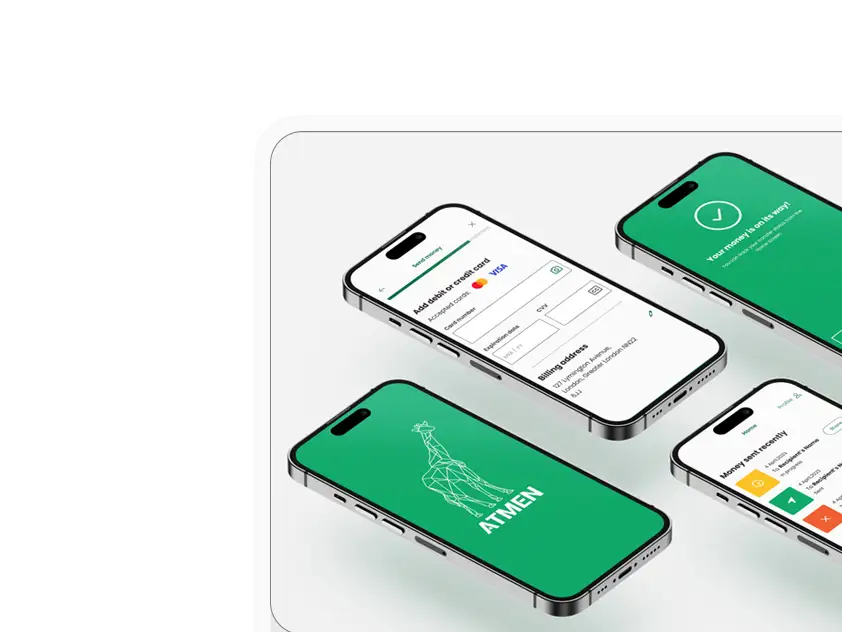
Atmen Fintech
Mobile App
Designing a Minimum Viable Product for a Diaspora Neobank Startup
Sterling Archer
By applying the DDD framework, we created multiple digital tools for a US based Data Company.

Ergomania and NGOs in the Netherlands
UX design for Fintechs, banks and financial startups is the everyday work of Digital Product Design company, Ergomania based out of Budapest, Hungary.

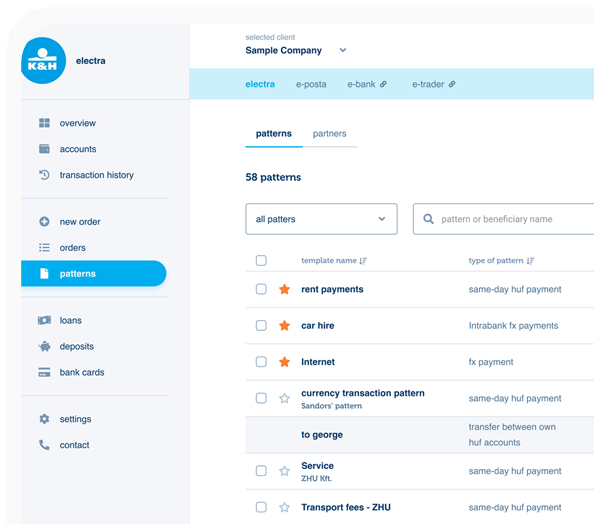
K&H Bank's Corporate Netbank
The K&H Electra Netbank App consolidates all financial needs into a single, user-friendly application. With its intuitive design, businesses can effortlessly manage their company's cash flow, transactions, and investments from one centralized hub.
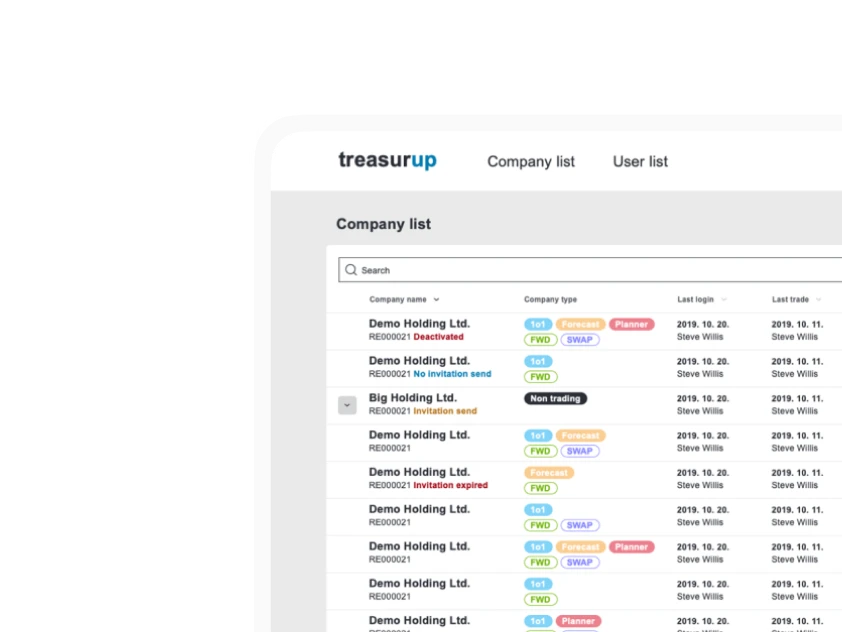
TreasurUp
We established written and visual consistencies and guidelines for TreasurUp’s financial platform.
Simple by OTP
Simple by OTP Bank is Hungary's No.1 mobile payment app for cashless payments with 1M+ downloads, and 1 million+ transactions.

White Label Banking App
We provide full-blown next-generation mobile banking solutions for sales-oriented banks.
Want to read more
about UX, fintech and banking?
Subscribe to our biweekly newsletter and get the latest of our news and thoughts!