Claude Design Has Arrived: What Does the Era of AI-Native Visual Design Mean?
The recent launch of Anthropic's Claude Design marks a pivotal shift in the digital product landscape, moving generative AI from purely text-based models into professional visual UX/UI workflows. The platform is actively challenging traditional design monopolies like Figma and Adobe. While it promises unprecedented speed and the elimination of the classic developer handoff, it also introduces new industry hurdles – including skyrocketing computational costs, aesthetic homogenization, and a fundamental realignment of the designer's role.
On April 17, 2026, Anthropic Labs launched the research preview of Claude Design, with which generative AI has definitively stepped out of the world of purely text-based models and into the market of professional, visual UX/UI workflows. Although the platform is currently in an experimental phase, the market reacted immediately: shares of traditional software monopolies like Figma and Adobe immediately started to fall.
Traditional software design has always consisted of isolated phases. The process went from wireframes through high-fidelity vector mockups to complex developer handoffs, and then manual frontend implementation. Each step required different software and competencies and, almost inevitably, part of the designer's intent was lost during the translation between static vectors and dynamic code. Claude Design’s goal is to transform this fragmented process into a single, continuous conversation (pipeline) where instantly functioning, production-ready prototypes are created from simple text task descriptions or raw reference materials. We will process our practical experiences in a separate article later; for now, let’s look at the initial professional reactions, the underlying technology, and the potential labor market consequences.
The Technological Engine: Opus 4.7 and the Context Window Revolution
Claude Design’s operation is based on Anthropic's most advanced current visual and reasoning model, Claude Opus 4.7. This infrastructure provides the computational capacity required to interpret complex visual hierarchies, derive intent from raw images, and build correct frontend architectures.

One of the model’s most important technical innovations is its increased vision processing capability. Opus 4.7 can process images with a resolution of up to 3.75 megapixels (2576 pixels on its longest edge). This capacity is more than three times that of previous Claude versions, which is essential for the system to read structural diagrams and screenshots with pixel-perfect accuracy and without hallucinations. Compared to market competitors, such as OpenAI's GPT-4o, the difference is clearly visible. While GPT-4o is competitive in speed and basic token prices, its maximum context window is only 128,000 tokens. In contrast, Opus 4.7 operates with a massive 1 million token context window.
This enormous capacity allows users to load entire corporate codebases, extensive design systems, and long, multi-day chat histories without the model forgetting the original instructions. To ensure that the system doesn’t immediately exhaust its memory, Anthropic employs a background summarization mechanism and Retrieval-Augmented Generation (RAG). Thus, from the uploaded brand guidelines, it brings into active memory only the specific details needed for the current design task. Despite the complexity, the response time is extremely low, averaging 320 milliseconds, which almost perfectly mimics the pace of human conversation, enabling real-time, iterative fine-tuning.
Code as Raw Material: Truth to Materials
In Claude Design, the primary medium of design is no longer a canvas where we shift vectors and pixels. The underlying philosophy rests on the principle of "truth to materials.” Since the final form of digital products is code, the generative process must natively output HTML, CSS, and JavaScript, rather than intermediate, closed design formats.
Native code generation, however, has a serious pitfall if the brand identity foundations are not laid down. Previously, the biggest flaw of generative UI platforms was their inability to strictly adhere to corporate identity, often creating formulaic, styleless interfaces since raw code in itself does not yet carry a brand's personality. Claude Design bridges this gap with an automated onboarding process. When launching a workspace, it is possible to connect an existing GitHub repository, upload PDF brand guidelines, or automatically scrape the style elements of a live website using a built-in tool. From this data, Opus 4.7 builds a dedicated design system from scratch, so the generated code automatically applies the company's specific colors and typography going forward.
The iteration process resembles a dialogue between a creative director and a lightning-fast frontend developer. If the visual density or contrast of the interface needs to be refined, the model can dynamically generate unique sliders and control buttons (UI controls) on the chat interface specifically for the given task. As we adjust these sliders, the underlying HTML and CSS update in real time. This workflow is made possible by the three-layer skill architecture:
- The Reference Layer (Knowledge Base) contains immutable core principles, such as accessibility standards and brand philosophy, ensuring that the AI understands the "why" behind the design.
- The Skill Layer (Workflow) includes prompt sequences that execute specific tasks, such as extracting a product requirement document (PRD) or running heuristic UX audits.
- The Tools and Connectors (MCP Layer) uses Model Context Protocol (MCP) servers to access external resources, for instance, pulling in live Jira tickets or API data.
Frontier Design and the Death of the Handoff
Anthropic did not stop at static interfaces. With the Frontier Design feature suite, the platform has entered the field of code-based prototyping, marking a significant step toward sentient design, where AI actively weaves intelligence into the interface. Previously, validating complex interactions, micro-animations, or hardware-dependent inputs required weeks of work. Claude Design, however, supports the native integration of 3D elements, WebGL shaders, audio and video integration, and even embedded secondary large language model (LLM) calls into prototypes. According to a report by the EdTech platform, Brilliant, interactive modules that previously required a multi-week engineering sprint – and which demanded up to 20 iterations in other AI tools – were successfully mapped interactively in Claude Design with just two prompts.

One of the most exciting elements of the system is the direct connection to Claude Code, Anthropic's coding agent. In traditional workflows, the handoff between visual designs and development is the point where the designer's intent is often lost. It happens that Figma files and Jira tickets do not accurately convey the intended behavioral logic to the development team. Claude Design solves this with the help of an automated handoff bundle. When the prototype is completed, the platform packages the visual assets, design tokens, and structural code into a machine-readable bundle and then sends it over to Claude Code with a single command. The agent autonomously sets up a local development environment, builds the modular Next.js architecture, integrates animation libraries (e.g., GSAP), then pushes the final code to GitHub and automatically deploys it on Vercel. With this, the traditional agile development cycle shrinks from weeks to hours.
Aesthetic Homogenization: The "Anthropic Teal" Phenomenon
As impressive as the technology is, the market's reception has been highly polarized. Alongside the platform's stability issues (such as disappearing comments or autonomous spatial micro-corrections not requested by the user), the most significant criticism has been directed at the extreme homogenization of visual outputs. Since LLMs are fundamentally statistical engines, they tend to pull toward the statistical average.
On developer forums such as Hacker News and Reddit, the phenomenon was quickly dubbed the "Anthropic Teal" experience. If not constrained by strict brand rules, the system almost always generates a generic interface operating with distinctive teal gradients, serif typography, and blinking status dots. An analysis of 500 applications conducted by an independent developer also confirmed that AI-generated interfaces are aesthetically quite similar.

This phenomenon has sparked a serious debate within the profession. Critics argue that AI merely produces a high-fidelity "slop" interface that completely lacks brand personality and user empathy. In contrast, more pragmatic voices believe that homogenization is actually a huge advantage. Just as the arrangement of car pedals is standardized for safety, software interfaces should also be built on predictability and standard behavioral patterns instead of unique creative deviations.
The Token Trap: What Does This Cost in Reality?
The massive leap in productivity comes with a serious price tag. Claude Design runs exclusively on the highly compute-intensive Opus 4.7 model, which consumes tokens quite greedily, meaning standard $20 Pro subscribers often exhaust their weekly quotas in just a few hours.
Using Opus 4.7 costs $5 per million input tokens and $25 per million output tokens. Because the system continuously sends high-resolution screenshots and code snippets back and forth in memory, the context window swells exponentially. In practice, sending a tiny, fine-tuning prompt can consume 2–5% of an entire session's allowed limit. To keep costs under control, large enterprises are forced to rely on monitoring tools, which help identify when a poorly constructed prompt is unnecessarily burning through the budget. The myth that AI immediately reduces software costs is quickly dispelled here: savings intended for labor are simply converted into raw computational costs.
Labor Market Realignment: Is Algorithmic Selection Coming?
Beyond the technological race – where Claude Design, for instance, has already integrated Canva's Brand Kits for automated presentation generation – the most important question is the future of the UX profession. According to the globally conducted, but heavily US-skewed UXPA 2024 salary survey analyzed by MeasuringU, 35% of organizations reported UX headcount reductions. At the same time, however, data cited in Figma's recent industry report from US-based venture capital firm Designer Fund shows that the number of designer job postings across their portfolio companies grew by about 60% entering 2026.
This, of course, is no surprise. Generative AI continuously automates the mechanical parts of the profession: shifting pixels, setting margins, and building basic components. This is what’s known as the "60% problem" – AI can complete 60% of the work. Professionals whose value consists solely of software knowledge and fast execution are in serious danger. Designers of the new era need a high-level systems perspective, a deep understanding of developer structures, and business-strategic thinking.
The situation is further exacerbated by internal organizational dynamics. Because these tools allow non-designers to generate in real time as well, leadership develops unrealistic expectations. As a designer pointed out on the UXDesign Reddit, product owners often confront the team with the fact that, using AI, they built a concept in one evening that the designer had spent weeks working on. This, however, ignores the invisible architectural work required for the scalability and accessibility of an interface. The AI output generated is often just a pretty, but structurally fragile, set piece.
In summary, Anthropic's entry into the world of visual generation is not just a problem for Figma or Adobe. Claude Design is clearly pointing the way: The future of digital product design will not be determined by pixel manipulation on a two-dimensional canvas, but by the orchestration of complex AI agents, the curation of system-level logic, and human strategic control over generated architectural processes. For those who can make this evolutionary leap, unprecedented speed and efficiency will open up – while those who cannot do so risk obsolescence in a market that no longer rewards manual execution.
Illustrations: From Anthropic's introductory video
About the authors
Balázs has been working in content for more than 20 years, having the role as an editor at one of the first and largest news sites, later helping to establish the content marketing business for media publishers and agencies. Today, Balázs serves as content producer at Ergomania Ltd.
Related case studies
Prefixbox
Prefixbox is a Hungarian e-commerce scaleup. We helped them design an AI agent that gives more accurate product recommendations to shoppers with generative AI.

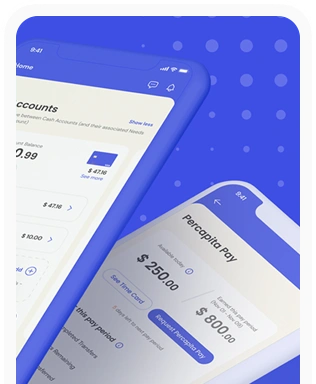
Percapita
We designed a full-fledged application for simplifying everyday finances.
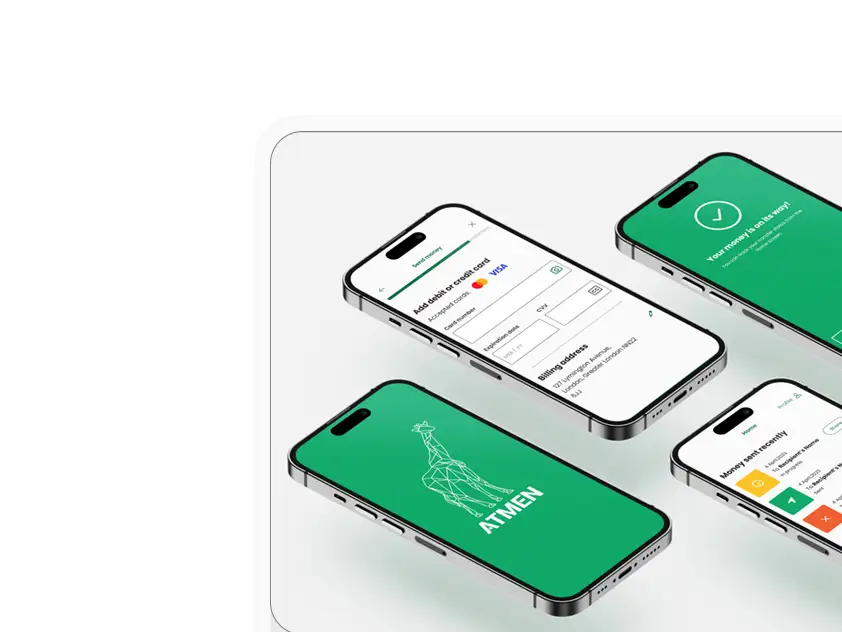
Atmen Fintech
Mobile App
Designing a Minimum Viable Product for a Diaspora Neobank Startup
Sterling Archer
By applying the DDD framework, we created multiple digital tools for a US based Data Company.

Ergomania and NGOs in the Netherlands
UX design for Fintechs, banks and financial startups is the everyday work of Digital Product Design company, Ergomania based out of Budapest, Hungary.

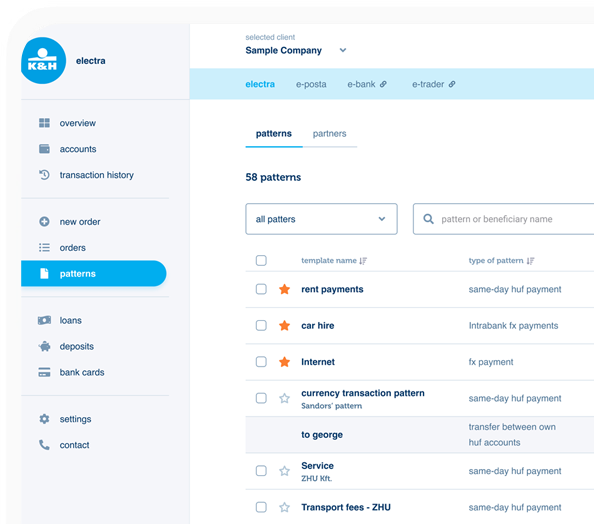
K&H Bank's Corporate Netbank
The K&H Electra Netbank App consolidates all financial needs into a single, user-friendly application. With its intuitive design, businesses can effortlessly manage their company's cash flow, transactions, and investments from one centralized hub.
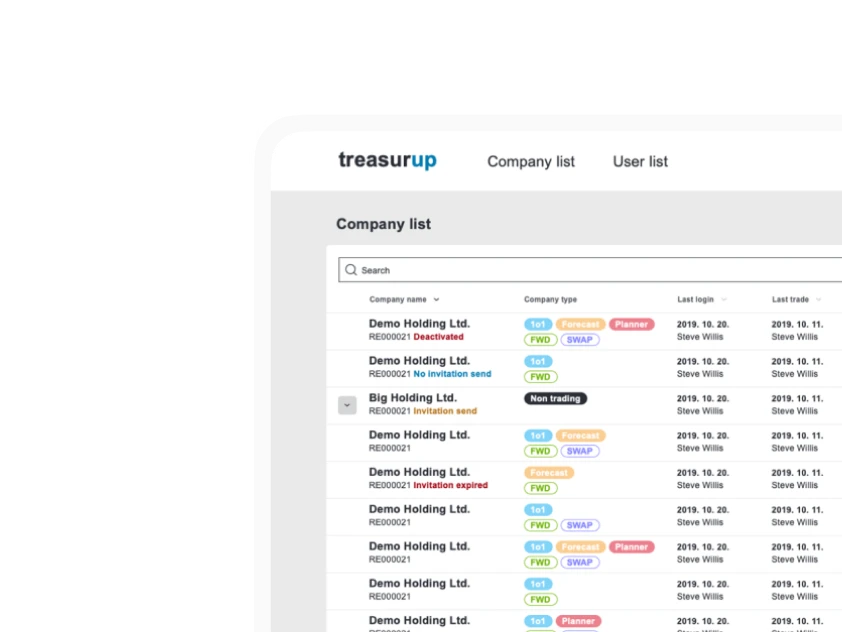
TreasurUp
We established written and visual consistencies and guidelines for TreasurUp’s financial platform.
Simple by OTP
Simple by OTP Bank is Hungary's No.1 mobile payment app for cashless payments with 1M+ downloads, and 1 million+ transactions.

White Label Banking App
We provide full-blown next-generation mobile banking solutions for sales-oriented banks.
Want to read more
about UX, fintech and banking?
Subscribe to our biweekly newsletter and get the latest of our news and thoughts!