Thailand Fintech: Sweat, Tears and Caffeine
Just five months after the launch of his company, I’m speaking to Warit Kasitanon, co-founder and CEO of Thailand Fintech Intentions Labs. I check with the published figure of 130,000 users for the company’s Parnuan product, but Warit counters, “Actually, we just got to 330,000.” The development roadmap wasn’t designed for quite that growth curve when Intentions Labs was founded in May ‘25, primarily to create a legal entity rather than to get instant traction in the market. However, Parnuan quickly went viral on social media, and Warit and his three colleagues were off and running. “Everyone is putting in sweat and tears, and using a lot of caffeine to build this.”
What’s in a name?
So what is the company about, and what’s Parnuan? Warit explains that the product came first and is named after a typical Thai Aunt – perhaps not the first idea that springs to mind in setting up a Fintech. He admits that the founders played around with more ‘techie’ names but they sounded too gimmicky. ‘Aunt Nuan’ captured the essence of the offering better, with the tagline ‘Your accountant Auntie.’ As Warit says, “I wanted the product to have personality, so we thought about what kind of character would fit a use case of finance and accounting while maintaining accessibility. It had to be something approachable that everyone can relate to. Nuan is a classic, old-school name for a Thai lady, and it sounds warm. So we went with that and haven't looked back. It resonates, it's very catchy, and it gets a lot of mind share.”

Relationship advice an unplanned bonus
Essentially Parnuan is an expense tracker with AI-based text interaction, helping users manage their budgets. So far, so simple. Users tap in their costs and like a good Auntie, Parnuan tots up the expenditure and can report on where the money is going, identifying everyday payments such as drink or food, which can be configured by the user into categories and placed in appropriate ‘buckets’. Deduct the buckets from a notional budget, and Aunt Nuan will warn you with increasing severity as you approach the edge!
During Intentions Labs’ brief life, a premium subscription model has already been made available, which includes voice messaging and the ability to use a phone camera – for example to send images of receipts which the system then logs. You can also just chat with the friendly older lady and Warit says there have even been examples of people asking how to deal with a relationship breakup. In the tech-savvy and young population of Thailand this doesn’t necessarily indicate naivety, rather it may be some users testing how responsive and human-feeling the app is. “It’s available and people do enjoy it,” he says.
 Warit Kasitanon
‘They won’t remember the presentation (just the way you made them feel)’
We’ll be back with Auntie Nuan soon, but meanwhile a conversation with Mike Rourke about Fintech in Thailand which tends towards the encyclopaedic. Mike has worked in wealth management and seen the steady movement away from the ‘exclusive’ idea that clients would want to retreat to the cigar room with their Relationship Manager for a fine glass of whisky and some cosy financial chit-chat. Digital transformation is now the name of the game.
The burgeoning generation of wealthy individuals are likely to be below fifty and have either inherited wealth, or have developed their own independent wealth. They tend to be digitally aware, tech-savvy, and understand more about sophisticated financial products. Mike says the tools for that understanding are all around: Just ask ChatGPT to explain how structured products work, in a simplified way. Internet access to personalized tuition has never been greater, and so the focus has changed on what wealth management is about. Rather than being a gatekeeper that tells clients what to do, the emphasis is on being a trusted partner, coupled with the huge advantage and scalability of technology.
The function of AI
If the likes of ChatGPT can teach people about wealth management, what part do other AIs have to play? According to Mike it’s an ‘interesting’ journey. “If you think about traditional finance, not many companies are greenfield. They all have legacy infrastructure and legacy technology, and they still have a long way to go to move from those legacy processes and systems to being fully automated. There are operations teams, middle offices doing processes that should be automated but aren’t yet. You also have to look at data structures. A lot of people fast track to doing something in AI without building the fundamental data structure and architecture that you need to be able to support it.”
Agentic AI that can make decisions and take actions independently, without constant human oversight may seem like the way things are inevitably going, but Mike asks whether it will make the decisions that customers actually need or want. The ground has to be prepared first, and at present few companies are doing that.
 Mike Rourke
Research is key
Mike does see great use cases for AI around research, where huge amounts of information can be processed quickly. That’s as in very quickly. AI can take snippets of a report, making them readable, understandable, and immediate. Waiting days for some market intelligence that a research team patiently assembles is no longer acceptable. But there’s still a way to go in ensuring that the data fed to an AI is good, and that data structures are right. Mike cites trying a beta AI offering from an unnamed company which fails to give the same answer twice. “Companies are starting to find that AI doesn't solve all that they thought it would, that the edge cases aren't just edge cases, and that the way the system learns means that you can get worse outcomes for some people. You have to be really careful, but do I think AI is going to help us in the future? Absolutely, but we have to create the building blocks to get there.”
Simplicity and complexity
This caution leads to a step-by-step proving of data structure and fitness for purpose, and the resolution to put in the hard yards of properly understanding all processes on the automation and digitization journey. The traditional cigars and whisky approach is fading, but human advice and intelligence is still vital. This leads to the subject of simplicity in financial apps, along with levels of complexity. Mike refers to the Japanese style of UI being overwhelming in information and overly complex. Everything is there in front of the user, with side banners and drop-downs. This is often accompanied by flashing anime characters which can make focus on the core data quite difficult.
He says that financial offerings should match customer needs, for example by using predictive analytics to show what is probably relevant. A complex trader may well need the twenty-page report and all the data points, but not when they’re on their mobile in a taxi. Then it’s about relevance and layering. The top layer is the overview, but a user can then dive ever deeper as they seek out more information. “It doesn't have to be so clean and simple that it's one button without any words on it, and you just know what it is because it has an icon on it. It also doesn't have to be so complex that you’re over-explaining or over-stimulating the customer. We should be somewhere in the middle, where they can see the options and understand the journey they’re going on.”
On the cusp of something beautiful
As Mike has pointed to sometimes over-complex Japanese financial sites, does he see anything similar in Thailand? First, a pen portrait of Thai life which he typifies at first glance as ‘chaos, but organized chaos’ that few Westerners will ever truly understand. However once you start to go with the flow, the pattern and structure can be very beautiful. This becomes a system, and an opportunity. Thai society is digitally well-enabled with a very high level of internet penetration, and Mike describes how even street sellers have QR code scanning to accept payment directly to their bank account. “Society is on the cusp of something beautiful. The energy is building, the fuel and momentum is building.” Infrastructure is mainly in place and now all that’s needed is a spark to ignite a huge wave of innovation and change. To achieve this there are solutions coming through that support and encourage all levels of the population. An example of this is the government initiative to get people digitally and financially aware by giving everyone a digital wallet with four tranches of 10,000 Baht – just over $300 US. It’s a great way to increase digital and financial literacy, and a government investment token has also been launched on the blockchain.
Parnuan demographics
Let’s return to that rapid take-off of Parnuan, in part through social media. The initial adopters were predominantly women in their 30s and 40s. Warit Kasitanon’s hypothesis is that the offering passed ‘The Mom Test’ in that there’s nothing needed to be downloaded or learned. Users simply texted the chatbot the way they already did with friends. With the uptake of Parnuan, the age demographic came down but still with that user 60% female profile. Many are ‘the responsible big sister type’ who manage finances for their whole family, looking after household accounts, helping parents with finances, and giving younger siblings an allowance. There are even high schoolers using Nuan to advise them, and there’s one example of a teacher using the app to help his pupils understand basic budgeting. A typical question from younger users to the bot is, ‘I really want to buy myself an i-phone … How many baht do I have to save every day?’
Weirdly, at the other end of the scale, Intentions Labs has seen high level business people managing multi-million baht portfolios with the help of Auntie Nuan. Then there’s the mass of salaried users who are simply trying to better manage their finances against debt. Initially Intentions Labs expected most custom from metropolitan Bangkok but actually that’s only about 30% of users, with the product reaching every corner of the nation.
Social media take-off
Let’s turn to the role of social media in boosting Auntie Nuan. It’s a task which was undertaken by the core team rather than an external agency, along with a friend of Warit’s, and some social influencers. Warit’s friend acted as the Auntie, using Apple’s Memoji feature that mirrors real facial expressions and vocals in the form of a personalized avatar. It put Parnuan on the social media map, but then Intentions Labs went further and reached out to micro influencers to get its message across. One in particular already had traction with her posts about how to live in Bangkok on 5,000 baht a month (about $150 US) – a perfect fit for an expense tracker that’s easy to use and can be featured in posts. The first clip on the first day racked up 400,000 views on TikTok and the second clip had reached 3.1 million views after just two months.
UX is the charm
“We focus a lot on User Experience,” Warit notes. “More so than the UI aspect. We don't have a designer in the core team, but I think that at this point it's still something we can manage. It gives the product a kind of homegrown charm because it doesn't feel like a company invested millions of dollars in designing something to look perfect. It feels like high schoolers trying to build something that's pretty cool!” Of course the team wants to improve UX-UI over time, but right now ‘charm’ is the look and feel they’re happy to go with. “Our approach from the start was a UX problem. The traditional way was to download an app, learn how to use it, and then every time go into the app and press Add Expense, and select the categories.” In his own research Warit saw that the process took at least thirty seconds to deal with just one expense, whereas the chatbot can reduce that to a few seconds. By the time they’d reached their initial 100,000 user mark, Intentions Labs noticed a competitor had emerged that was doing almost the same thing, but because its UX was less developed it still required users to put in the time to find their way around. Far easier to simply drop in on Auntie Nuan for friendly help!
 Some of the Intentions Labs team
Getting the big picture
So are Fintech applications simple or complex in Thailand? Mike Rourke returns to his image of sitting in a taxi and wanting the big picture, but being enabled to deep dive if necessary. “Where would the majority of people have their moment when they interact with a financial application? It's going to be when they can't do anything else. I’m on the Bangkok Mass Transit System to work, or I’m in a taxi. I can't go too deep into work tasks, but I will be able to scroll and look at the markets. If we are getting the cycle right, then we will be inviting users into the application at the right time, and doing it in a way that is attractive to them. We are taking them into something which isn't overloading them or making them feel, ‘Oh, I can't make a decision now, I will have to look at this later.’ But, it also mustn’t be so simple that someone doesn’t know how their goals will be met.”
It’s the way users feel
Looking to the near future, Mike’s wide-ranging interests also take in how new design will impact the retail space, as he comments on how increasingly AI will bypass checkouts and sales pages. Search for the item you want, get it in a basket, then facilitate the purchase, all through Google. And in this new world, brands, websites and apps can all be bypassed. Apps that currently promote cross selling and upselling could become redundant as the shift takes place. “So how will we adjust and how will we operate with the bigger players to ensure we still get the traffic we need? Or to be blunt, how are we going to make sure we have a trench or a moat which can't be taken?” Mike predicts that the world will not stay the same, especially when virtual bank licenses are being granted, and technology players and traditional corporate players are also starting to provide financial services. Companies will have to work harder at pointing out their unique selling points. “So the way you interact – and the experience you give your customers – will be the thing that will truly differentiate you. It's like a presentation: people won’t remember the presentation … just the way you made them feel.”
Can Auntie go global?
So how did the launch of Parnuan make people feel? The viral campaign helped to massively spread the word, and Warit Kasitanon projects further growth in the near future, looking to one million users and commercial success. Right now Parnuan is only available in Thai but when it’s in English, with another appropriately ‘cute’ name, it’s a product which could work in almost any market. Warit has a personal dream of taking it to the USA and have Americans ask, ‘Who are these Thai guys and how come they’re here? How have they gotten millions of users without us knowing anything about them?’
Parnuan points towards future success through building an ecosystem, and Warit mentions that tracking expenses and budgeting could be a first step towards loan qualification. There’s also the potential for deeper financial planning and investments, which could suggest partnering with a bank. While he admits to the possibility of this, he stresses that right now Intentions Labs is proudly independent and intends staying that way. “In Thailand banks are monopolies, and if we were acquired by a bank it would need to be on terms that do not compromise our principles and are in the interests of our customers.”
The company intention
Having discovered the meaning behind Parnuan, it’s worth asking about the rather more ‘techie’ company name of Intentions Labs. “The Labs part is because we are innovation-focused on research and development, and very straight to the point, with no corporatization of the company. Intentions are the reason why we have this company. The first thing we do with the product is identify the user's intentions because it's an AI product. That's the key to the breakthrough of how we built the product, by catching the intention of the user.” Warit is on a roll, “But in terms of the philosophical meaning, I want us to build with intention. Not just to make a quick buck, but actually tackle real problems, and not just find the next 10 million seed investment. We wanted to be very aware of what we're building and try to be different.”
Honesty, hope, and forgiveness
The mention of philosophy is interesting, because apart from being a tennis obsessive, as a youngster Warit Kasitanon was in the USA as an exchange student, where he started a life-changing study of philosophy, “A lot of my weird perspectives are down to the moment I entered that first class. Philosophy teaches you to ask questions without hoping for an answer. That’s given me the edge to ask the simple questions that people often don't really want to talk about.”
People are however talking about Intentions Labs and Aunt Nuan, although for the moment mainly in Thailand. Warit summarizes the offering, “Through our growth we've discovered that other than the functionality of the product and the need for a personal finance tool, we are addressing the relationship between people and their money. Experts and advisors say that finance is best approached unemotionally and using reason. However what we and our users find is that managing Personal Finance is emotional, and suppressing this can lead to an avoidant relationship between a person and their money issues. Our intention is to foster a healthy relationship between someone and their finances, with an approach that allows them to manage money with honesty, hope, and most of all, forgiveness.”
About the authors
Harlan Cockburn is a writer and director based in Budapest, Hungary.
Related case studies
Prefixbox
Prefixbox is a Hungarian e-commerce scaleup. We helped them design an AI agent that gives more accurate product recommendations to shoppers with generative AI.

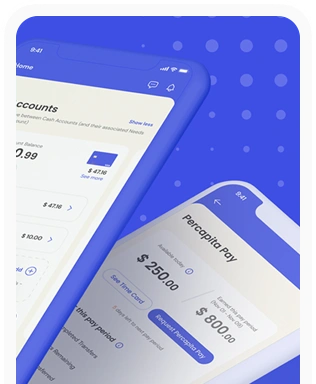
Percapita
We designed a full-fledged application for simplifying everyday finances.
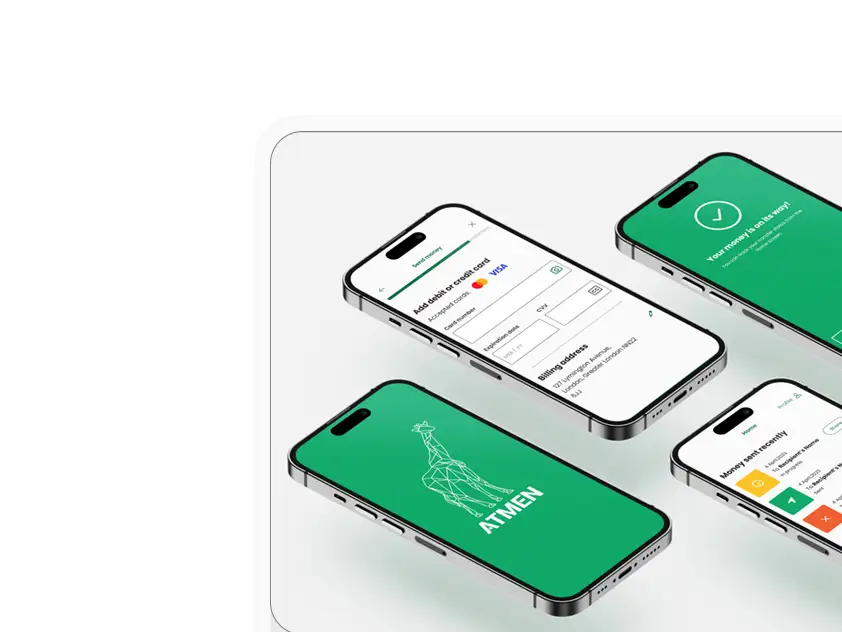
Atmen Fintech
Mobile App
Designing a Minimum Viable Product for a Diaspora Neobank Startup
Sterling Archer
By applying the DDD framework, we created multiple digital tools for a US based Data Company.

Ergomania and NGOs in the Netherlands
UX design for Fintechs, banks and financial startups is the everyday work of Digital Product Design company, Ergomania based out of Budapest, Hungary.

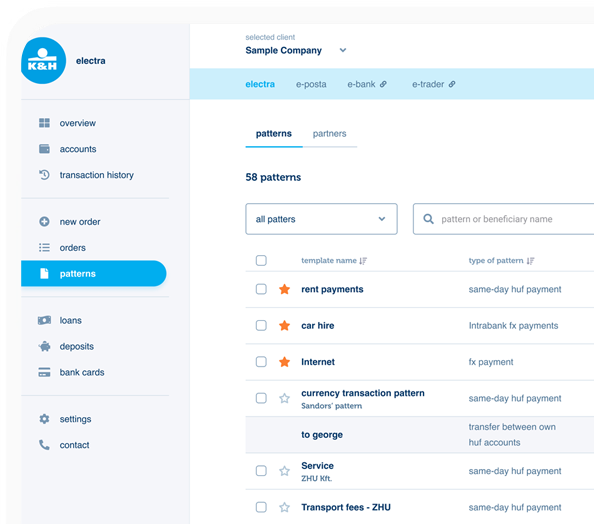
K&H Bank's Corporate Netbank
The K&H Electra Netbank App consolidates all financial needs into a single, user-friendly application. With its intuitive design, businesses can effortlessly manage their company's cash flow, transactions, and investments from one centralized hub.
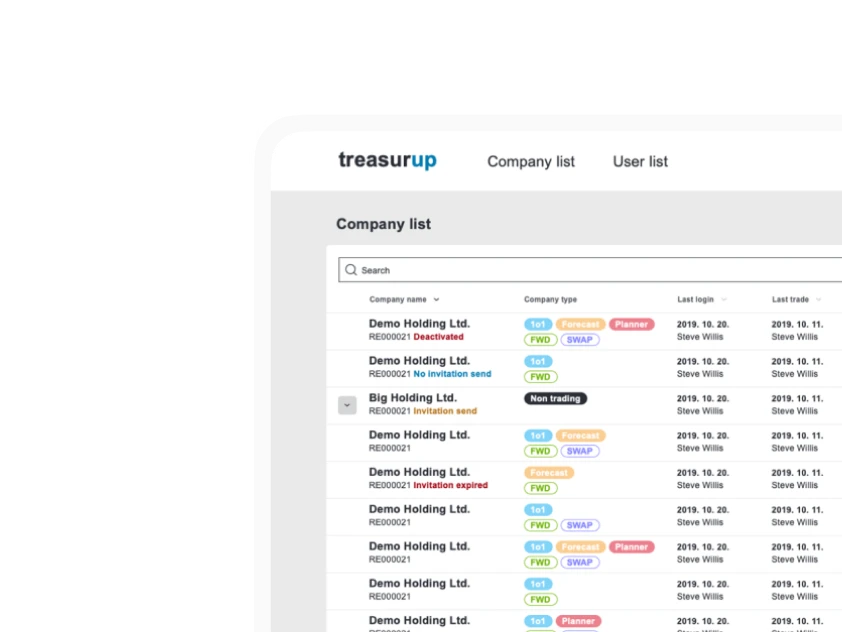
TreasurUp
We established written and visual consistencies and guidelines for TreasurUp’s financial platform.
Simple by OTP
Simple by OTP Bank is Hungary's No.1 mobile payment app for cashless payments with 1M+ downloads, and 1 million+ transactions.

White Label Banking App
We provide full-blown next-generation mobile banking solutions for sales-oriented banks.
Want to read more
about UX, fintech and banking?
Subscribe to our biweekly newsletter and get the latest of our news and thoughts!