Banking via AI – What Does the Launch of Revolut AIR Mean?
On April 9, Revolut launched AIR, its AI assistant, to its 13 million users in the UK. The core of the product is simple: the user asks a question in natural language, and the app answers and takes action – without menus, categories, or settings pathways. With a single sentence, you can query your monthly expenses, cancel a subscription, check a stock price, or even purchase an eSIM data plan for travel.
AIR is not just a chatbot on the support tab; Revolut is positioning it as the primary interface for the entire application. If the product delivers on its promises, the UX logic of retail banking will fundamentally change. The key questions are exactly where, for whom, and at what cost.
What is Air, and How Does it Work?
From a technical perspective, AIR is a system based on a RAG (Retrieval-Augmented Generation) architecture. The large language model is only responsible for semantic interpretation, while the actual data retrieval happens from Revolut's own closed databases. The user's financial data does not enter the model's context – under the "zero data retention" policy, partner AI companies commit to neither storing the data nor using it to train models. In a GDPR environment, this is not just an ethical question, but a fundamental prerequisite for bringing the product to market.
The security architecture is equally well thought out. AIR can interpret and prepare any request, but it ties every financial transaction to biometric approval. A "Freeze my card" command will not execute without FaceID or a fingerprint. This simultaneously solves a UX problem – the user feels safe from autonomous AI actions – and a legal problem, since European banking regulations do not recognize AI-based authorization without biometrics. For once, the design decision and the compliance requirement point in the same direction.
Behind the infrastructure lies Revolut's deepening Google Cloud partnership spanning several years, which was specifically expanded to include the integration of Gemini models. Furthermore, a cluster of 200+ NVIDIA H100 GPUs running on the Nebius AI Cloud platform handles high-volume, sensitive tasks – such as financial crime detection or processing 1.2 million support tickets per month.
The UX Question: Does Chat Really Kill Navigation?
AIR's boldest claim is that the conversational interface will replace traditional menu-based navigation. From a UX perspective, this is provocative – and half true. A characteristic of a traditional banking app is the complexity of its information architecture. Think about it. How many clicks does it take for an average user to find out how much they spent in coffee shops in the past 30 days? With AIR, it's one sentence. Research consistently shows that users tolerate contextual, complex data-retrieval tasks better in a conversational format than via a menu tree. Natural language here is not a simplification; it’s a more precise form of expression.
 AIR is an overlay that provides quick access to functions that are hard to find or that require a contextually complex query
At the same time, conversational UI is not a silver bullet. Where traditional navigation is strong for familiar, predictable, easily scannable content, chat is slower and more cognitively demanding. No one wants to use a chatbot to search for a setting they know is somewhere in their profile.
Revolut is likely not planning a complete replacement, but rather building a second layer. AIR is an overlay that provides quick access to functions that are hard to find or that require a contextually complex query. However, the marketing message that "navigation will disappear" might be slightly overpromising and could even be a product strategy risk if user expectations are not met.
The Subscription Model and AI as an Upsell Factor
Little has been written about the business logic behind AIR's introduction, but it is worth stating that the product not only improves the UX but also strengthens Revolut's revenue model.
Revolut operates on five subscription tiers (Standard, Plus, Premium, Metal, Ultra); AIR weaves through the entire system. For a free Standard-tier user, AIR helps them navigate – but continually guides them toward features that are only unlocked by premium packages. If a Standard user realizes with the AI that the Ultra plan includes 3 GB of global eSIM data per month just as they are about to travel, that is a very specific, contextual upsell moment.
The Ultra plan also includes lifestyle subscriptions such as the Financial Times, WeWork, ClassPass, NordVPN, and Perplexity Pro – all of which can be managed via AIR from a single interface. This is not just a convenience perk: the more external services a user manages within Revolut's ecosystem, the higher the switching cost and the lower the churn. AIR is the link that truly turns this ecosystem into a single interface.
The Real Innovation: the Ecosystem Logic
If AIR were merely a smarter chatbot, it wouldn't warrant a deeper analysis. The real stake is ecosystem integration.
Take the eSIM example. When Revolut introduced its eSIM product in 2024, it quickly became its most popular non-banking feature. Now, with AIR, buying an eSIM is simplified to a single-sentence interaction right in the middle of banking – so it's a direct challenge to standalone eSIM providers like Airalo, Holafly, and Saily.
The same logic applies to the travel sector. The AI startup, Swifty, which Revolut acquired from the Lufthansa Innovation Hub incubator in October 2025, handles complete travel booking via a conversational interface. The Booking.com partnership rewards bookings with RevPoints, which can be exchanged for miles with 30+ airlines. AIR is the link that connects these isolated verticals into a single conversational interface. This is superapp logic, but in a European, GDPR-compliant, fintech-native guise.
The expansion into telecommunications is particularly noteworthy. In April 2025, Revolut announced the launch of domestic mobile plans in the UK (on the Vodafone network) and in Germany: unlimited calls, SMS, and data, plus 20 GB of EU+US roaming, starting at £12.50 per month with no lock-in. An AI banking assistant that can autonomously monitor a user's data usage and top up instantly when needed – more cheaply than a traditional provider – poses an existential threat to the standalone telco sector.
The Competitive Landscape: Who Else is in the Field?
AIR did not appear in a vacuum. Fierce AI competition is underway in Europe. Revolut was not the first. A few weeks earlier, Starling Bank launched its agentic AI assistant, also built on Google Gemini foundations. The Dutch neobank Bunq's assistant, Finn, launched in 2023‒24, now handles 97% of support interactions without human intervention, with an 84% autonomous resolution rate across 38 languages. Currently, this is the best-documented result in the European neobank AI space. According to an independent survey commissioned by Bunq, Irish users trust AI built by banks nearly twice as much as generic chatbots, which is a remarkable figure regarding product trust.
.png) Revolut HQ
Revolut HQTraditional banks aren't standing idle either. NatWest launched an agentic assistant in March (based on OpenAI); Barclays is collaborating with Microsoft; and HSBC is collaborating with Mistral.
Revolut's competitive advantage is primarily data volume: 1 billion transactions a month, 70 million global users. This is a behavioral database that no single European neobank can replicate. If AIR can learn from aggregated, anonymized patterns in the long term, its predictive capabilities will substantially exceed those of smaller players.
The Paradox of Automation
Revolut receives 4.7‒4.9 stars on Trustpilot, but a different narrative emerges on Reddit forums. Power users regularly complain that it is impossible to escape automated chatbot loops and reach a live agent. In documented cases, AI support communicated a fake human identity while remaining completely incapable of resolving complex cases – frozen accounts, lost transfers, anti-money laundering triggers.
This is a structural problem. AI performs excellently on deterministic, repetitive tasks. It performs poorly when placed in situations that require empathy, flexibility, and exception handling.
From AIR's perspective, this raises a fundamental design question: How does the system know when it needs to step back and hand control to a human? This is not merely a UX question – the European Digital Operational Resilience Act (DORA) mandates fallback mechanisms and auditable logs for automated financial processes. If AIR does not provide a clear, simple exit route toward human support, it is not a better experience, just a prettier dead end.
What Does All This Mean for Fintech and UX?
Revolut AIR signals something real: a conversational AI layer within banking applications is becoming the baseline of expectations. Users who get used to querying their expenses or buying an eSIM with a single sentence will not return to a 6-click flow.
So the issue is not chat vs. navigation, but rather which modality is appropriate for which task. The AI overlay removes some tasks from classic information architecture – but the remainder must be rethought, simplified, and adapted to context.
For product teams, the question is sharper: ecosystem integration on a single conversational interface is not merely a UX enhancement, but a business model. Revolut is certainly developing AIR not only because it makes things easier for customers, but because it brings customers closer to the upsell points of premium packages, making them harder to lose. The switch, therefore, isn't about chatbot technology. It's about who holds the entirety of the user's financial behavior in their hands.
Revolut AIR is available to 13 million users in the UK. The exact timeline for the European rollout is not yet known; continuous deployment is expected in parallel with the establishment of the Western European HQ in Paris.
About the authors
Balázs has been working in content for more than 20 years, having the role as an editor at one of the first and largest news sites, later helping to establish the content marketing business for media publishers and agencies. Today, Balázs serves as content producer at Ergomania Ltd.
Related case studies
Prefixbox
Prefixbox is a Hungarian e-commerce scaleup. We helped them design an AI agent that gives more accurate product recommendations to shoppers with generative AI.

Percapita
We designed a full-fledged application for simplifying everyday finances.

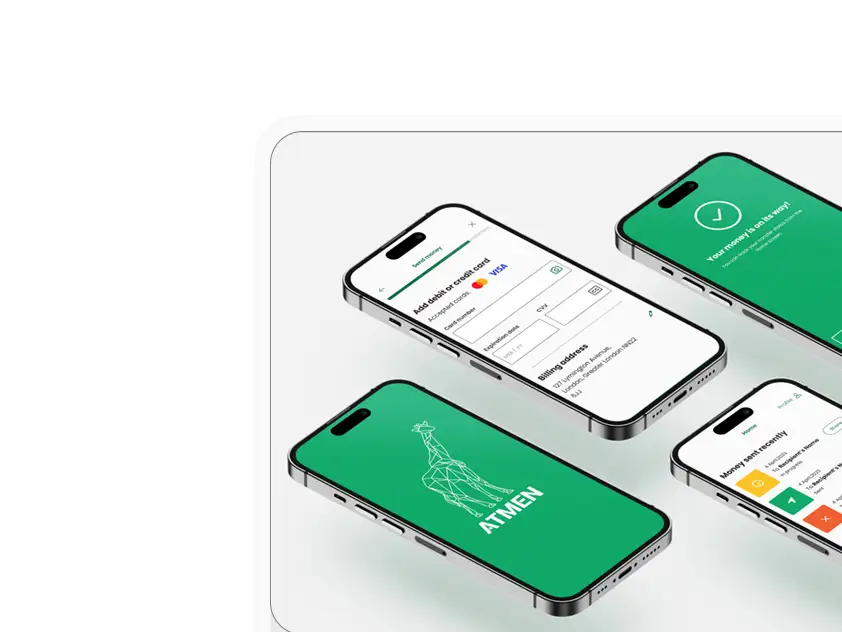
Atmen Fintech
Mobile App
Designing a Minimum Viable Product for a Diaspora Neobank Startup
Sterling Archer
By applying the DDD framework, we created multiple digital tools for a US based Data Company.

Ergomania and NGOs in the Netherlands
UX design for Fintechs, banks and financial startups is the everyday work of Digital Product Design company, Ergomania based out of Budapest, Hungary.

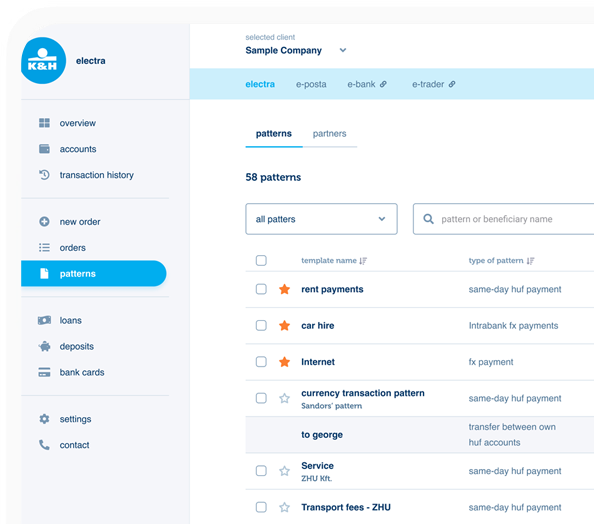
K&H Bank's Corporate Netbank
The K&H Electra Netbank App consolidates all financial needs into a single, user-friendly application. With its intuitive design, businesses can effortlessly manage their company's cash flow, transactions, and investments from one centralized hub.
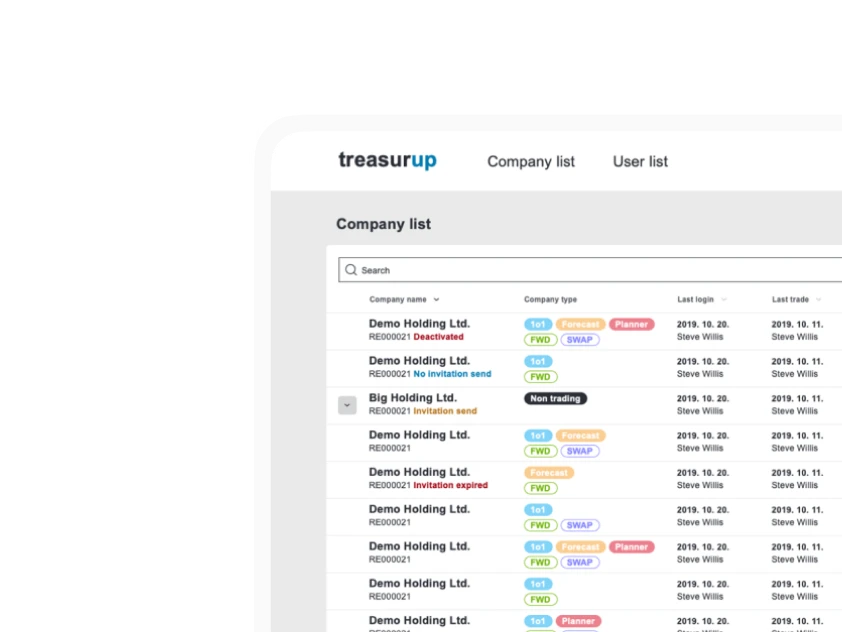
TreasurUp
We established written and visual consistencies and guidelines for TreasurUp’s financial platform.
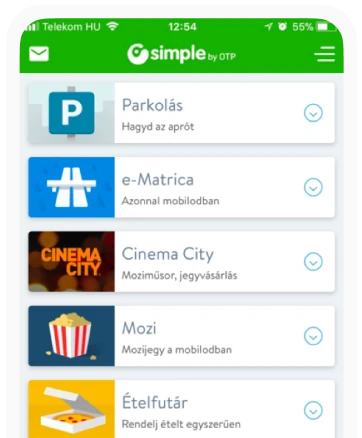
Simple by OTP
Simple by OTP Bank is Hungary's No.1 mobile payment app for cashless payments with 1M+ downloads, and 1 million+ transactions.

White Label Banking App
We provide full-blown next-generation mobile banking solutions for sales-oriented banks.
Want to read more
about UX, fintech and banking?
Subscribe to our biweekly newsletter and get the latest of our news and thoughts!