Vietnam – Free from Financial Tradition
Back around 2014, Nicole Nguyen recognized the world-changing possibilities of Web3, while at the same time acknowledging that it didn’t come from anything ‘too new’. Here was a technology which started from an existing structure, but nevertheless could, “Basically change the way that people think and do and - of course - develop other technologies and use cases. It creates a decentralized space where people can come in, leverage the infrastructure, build up use-cases, distribute and raise funds, and develop their product without any of the major barriers created by existing organizational structures. So we’re talking about cross-border, cross-market, and of course, cross-technology infrastructure. So that was how I became interested in Web3.”
At first Nicole saw that Web3 was rather taboo and was greeted with a lot of prejudice, but over time there has been considerable convergence between traditional finance and decentralized finance. As a result the vision of Web3 has also changed and flexed.
 Nicole Nguyen, APAC DAO Founder
Breaking down barriers
From the start of her journey Nicole recognized that there was work to be done, and opportunities to be gained from creating a community to benefit people, “Without barriers to entry, and of course without unnecessary layers of different compliance or regulatory constraints.”
And so APAC DAO (Asia Pacific Decentralized Autonomous Organization) was formed, headquartered in Ho Chi Minh City, Vietnam, and (in 2026) described as, ‘An Asia-focused technology ecosystem by and for community with 3,500+ members, and 800+ projects in 25+ countries.’ Although APAC DAO was born from Nicole’s interest in the potential of Web3, it has become much more, with a decentralized space enabling people to enter and leverage the community. Nowadays the main focus tends to be on builders and founders, connecting them to VCs and other early supporters of Southeast Asian projects, and sometimes behaving almost as an incubator. The region is well-placed to be a hub for financial and related technologies, because as Nicole points out, the market of roughly 700 million people is large, tech savvy, and young. In Vietnam 60% of the population is under 35 years old.

Being free from traditional financial strictures
In addition, many APAC countries are not burdened by a legacy position of several centuries of economic ways of working, and so Nicole and her founding colleagues weren’t limited by traditional thinking and ways of working. Many countries in the region have had turbulent political and military disputes in their recent past, but now Vietnam in particular enjoys a reputation as a point of calm and peacefulness. There is increasing investment from Chinese and American companies, looking to route production and distribution through Vietnam, Malaysia and the Philippines. Vietnam itself has been one of the biggest outsourcing hubs for many global companies, “We are inherently very hungry for knowledge,” says Nicole. “Also, we have a huge supply of developers and talents in technology, which makes us more adaptive and more resilient, as well as more ready for technology adoption, whether it’s AI, Web3, or new technologies such as quantum data centers.” These are just some of the reasons why APAC DAO is advocating for Southeast Asia, with a lot of interoperable growth upcoming. Nicole wants to see the world paying increasing attention to a region with a great deal going for it.
 APAC DAO hosting a Builders Meetup with Amazon Web Services and Ludium
Where Web3 is at
So if that’s the considerable scope of what Nicole’s organization is working on, where does Web3 fit in? It was the springboard, and she says it is certainly changing some parts of the world and some people’s lives. “How we are looking at Web3 right now is that it is going to be one of the underlying tech stacks, together with AI and other technology, to change the way we leverage those technologies, and how products are developed in society. At its core, Web3 is - in layman’s terms - a decentralized data infrastructure and data set, and based on that, you can do everything. You can, of course, do AI use-cases. You can make products for Defense; provenance tracking; and financial products. It’s a very agnostic infrastructure where you can plug in different existing and future products.”
 APAC DAO has also worked with BASE (L2 Ethereum) in a workshop series
The beauty of this approach, Nicole points out, is that the infrastructure isn’t owned by any government or other entity. There’s no Google or corporate ecosystem controlling how it’s used. “How you see and how you leverage this data or this infrastructure is going to be up to the individual or the organization that has access to the blockchain. We have different types of blockchain, but one of the most important aspects is the permissionless or public blockchain where everybody can access data. They can also set up their own product, create the asset and store the asset without asking for anyone’s permission. And basically everyone can come together and support and validate the data.”
Nicole is very keen on the consensus approach that is required for the system to function. She cites Ethereum, Bitcoin, and indeed other cryptocurrencies which can be circulated without government permissions, and used without intervention from regulatory bodies. This means the field is open for financial products, Fintech products, and tokenized and fractionalized assets.
APAC DAO and the Vietnam Fintech Summit
 Vietnam Fintech Summit 2025, Hanoi
As a future-focused thinker, Nicole foresees the time when the whole world is on the blockchain, with a very flat structure that allows easy access to create and innovate new products, with minimal regulatory constraints. This includes, of course, lack of geographic constraints. So going back to Vietnam in particular, why was there a need to create APAC DAO, and in what ways does it differ from a typical national Fintech Association? After all, it brings people together, creates events and conferences, and reaches out to other countries. Nicole points out that for Web3 APAC DAO is the main ‘brand’ in terms of community building for companies going to market in Web3. She also runs another entity however, the Vietnam Fintech Summit, an annual event co-hosted with the Ministry of Science and Technology. The Summit started in 2024 with around 100 attendees and has grown rapidly, and there are some similarities in its goals, and those of APAC DAO. However the Fintech event is primarily targeted on international companies looking to enter the Vietnamese market, whereas APAC DAO is much more predicated on inclusivity. With APAC DAO there is no gatekeeping, and no membership subscriptions, so anyone can join and leverage the community.

In time Nicole says that the two organizations might merge or become more interoperable. Part of the reason for this are new governmental regulations around digital assets issued in 2025, which are slowly transforming Web3 from, as Nicole says, “A greenfield, wild west position to something more mainstream.” As more banks and financial institutions get involved, a new mindset about technology, compliance and interoperability is developing. Despite this slow merging however, Nicole sees the value in keeping her two organizations separate, at least for the time being.
Making a living
So how does APAC DAO make a living? Well, it’s partly through consultancy work, but also through execution, in some cases planning and executing the go-to-market strategy for companies entering the Southeast Asia region. Nicole makes the pitch, “So let’s say your team is looking to enter Southeast Asia, there are a couple of ways that we can engage with you. Number one is, of course, to consult and advise on strategic partnerships, community engagement, and regulatory engagement - depending on the stakeholders that you’re looking at in the region. The second part would be more about execution. We give you the strategy, and then we also execute that on the ground, making sure that we will be able to create the pipeline for you to actually enter the market. That can be through events, conferences, and public speaking exposure. It can also be through private dialogue with governments. Additionally we’re involved in community activation such as roadshows and events, all designed to help engage your business in the region.”
Looking as a whole, what’s the role of China in the region? Nicole says it has its own place and demands its own unique strategies - there are different ecosystems, distribution channels and even social media. So while APAC DAO has certainly engaged with Chinese businesses, there’s the need for strong local teams within China to enable further development. She points out that there’s been a lot of Web3 innovation by Chinese companies and entrepreneurs, but not resident in China, much of the action taking place in the Special Administrative Region of Hong Kong. However rather than looking inwards to opportunities in China itself, APAC DAO is more focussed on helping Chinese companies expand into Southeast Asia, often using Hong Kong or Singapore as hubs.
Planning, and looking ahead
Nicole laughs in mentioning that as a communist country, Vietnam has a legacy of making 5-year plans, however with the rate of technological change, sometimes even a year ahead can seem difficult to envisage. One part of future planning for APAC DAO is researching and developing how blockchain can integrate with other technologies, AI being the prime example. But if (or when) quantum comes in, many current technologies could become redundant. This is why, although she is a Web3 ‘evangelist’, Nicole cautions about getting too specific about the technology, or even just specifically about Vietnam as a market.
She gives as an example a company wanting to create an interoperable stablecoin platform for Southeast Asia: that will not be one technology, but far more use-case focused. “We have already stepped out of just Vietnam, and are advocating for Southeast Asia in general. The opportunities obviously lie in the more open and inclusive mindset of clients, companies and projects when it comes to technology adaptation. And of course, in terms of market expansion.”
Some of the challenges facing this market expansion are the sheer diversity of territories, and regulatory systems. In itself Nicole praises the beauty of cultural diversity across Southeast Asia, but all this ‘nuance’ does present a certain amount of headaches when it comes to harmonizing regulatory systems. “Since we are moving to converge between Web3 and the traditional finance space, it’s also very important that we include this conversation about regulation and compliance with our partners, clients, and stakeholders in different countries. That’s one of the challenges, but it’s also an opportunity.”
Looking at UX-UI
Another challenge-stroke-opportunity, is how user interfaces will develop in Vietnam and Southeast Asia generally, especially given Nicole’s expectations for developments in AI, and the possible - or probable - developments in quantum computing that are just around the corner. She says that AI integration into UI-UX design is already a sensitive topic for many financial service companies and Fintechs because it’s money-sensitive from the company’s point of view, and on the user side there are many questions about data being potentially jeopardized. It’s becoming more of an issue in Vietnam, but is not yet a hot button topic. Data privacy is certainly in people’s consciousness and there are a number of companies working to develop on-premise solutions, although this won’t be a one-size-fits-all self-curated technology.
Whatever the solutions, the aim is to increase data privacy and security. In the blockchain space Zero Knowledge Proof is changing the way banks share data without revealing a client’s raw source data - a use-case which will enable a bank and a third party handling peer to peer lending. As Nicole elaborates, “The bank doesn’t have the capacity to offer peer-to-peer lending products, but what they can do is integrate a third-party product in their platform. A user can then see just one single interface, and don’t have to leave the app: They don’t have to download another app or sign up for another account. It’s going to benefit everyone, and users will be able to see more curated products.”
 APAC DAO joined forces with the Sovico Group to host the HDBank Hackathon 2025
The changing world
Nicole’s own story includes doing her Masters in the UK, specializing in business economics. Following graduation she then worked for various NGOs. Her dream was to change the world, but it wasn’t until she became involved in Web3 and blockchain that she began to see her pathway towards doing that. She found the shift to the tech space abrupt, but ‘refreshing’ in the challenges that it offered. The experience opened her eyes to the possibilities of more international markets, just as her time in the UK had shown her the potential of consulting and financial markets, along with Fintechs.
Nicole’s desire to help engineer change has continued beyond her business interests, including her participation in the ISEC student organization, a youth-led global network spanning over 30 countries, ‘Empowering young people with the resources and organizational framework needed to lead grassroots climate justice movements, challenge institutional polluters, and uplift frontline communities.’ Nicole’s involvement began around her third year in university, and she has since helped spread the word in Vietnam. That’s cause for celebration, and perhaps optimism too.
So what is her feeling about Vietnam, and the APAC region in general?
“Back 5 years ago I would have rated my optimism as 10 out of 10,” she says. Now it’s dropped to 7 or 8 out of 10, but that’s still pretty good. “This region is definitely one of the go-to destinations for tech companies. For us in Southeast Asia, there’s a lot of things to be optimistic about. It’s a great hub for tech companies in terms of market size, and in terms of a neutral position in the whole geopolitical crisis. Speaking of Vietnam in particular, we have our young generation.” She adds the caveat, “I would say that by 2045, we might witness some slowdown with the economic growth because of the aging population. But until then, we can do manufacturing, we can do building, we can create products and innovate.”
Considering that in a country originally known for strict 5-year plans, and where Nicole herself is working to a one year window, that’s a resoundingly optimistic projection for the future in Vietnam, and the APAC region.
About the authors
Harlan Cockburn is a writer and director based in Budapest, Hungary.
Related case studies
Prefixbox
Prefixbox is a Hungarian e-commerce scaleup. We helped them design an AI agent that gives more accurate product recommendations to shoppers with generative AI.

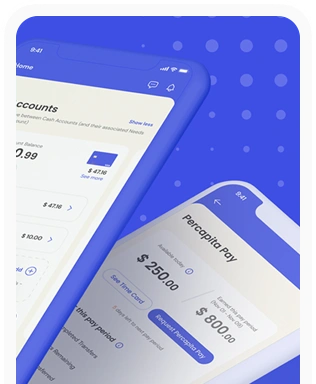
Percapita
We designed a full-fledged application for simplifying everyday finances.
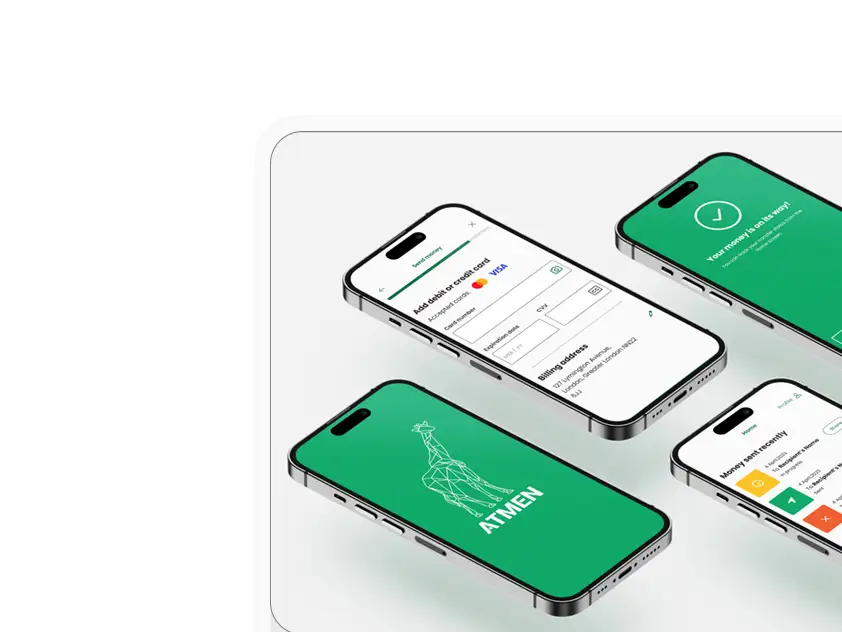
Atmen Fintech
Mobile App
Designing a Minimum Viable Product for a Diaspora Neobank Startup
Sterling Archer
By applying the DDD framework, we created multiple digital tools for a US based Data Company.

Ergomania and NGOs in the Netherlands
UX design for Fintechs, banks and financial startups is the everyday work of Digital Product Design company, Ergomania based out of Budapest, Hungary.

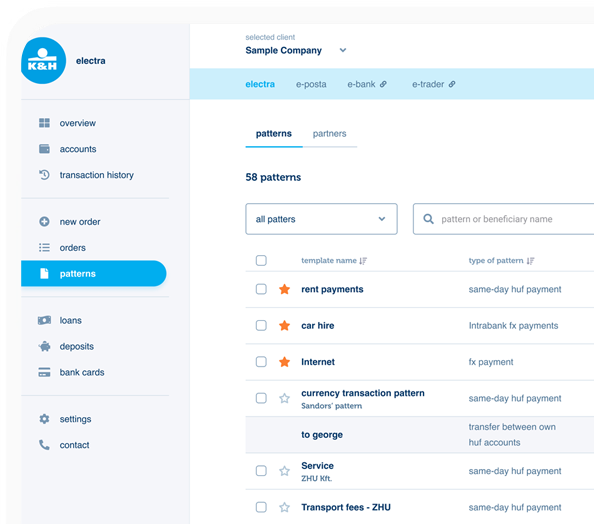
K&H Bank's Corporate Netbank
The K&H Electra Netbank App consolidates all financial needs into a single, user-friendly application. With its intuitive design, businesses can effortlessly manage their company's cash flow, transactions, and investments from one centralized hub.
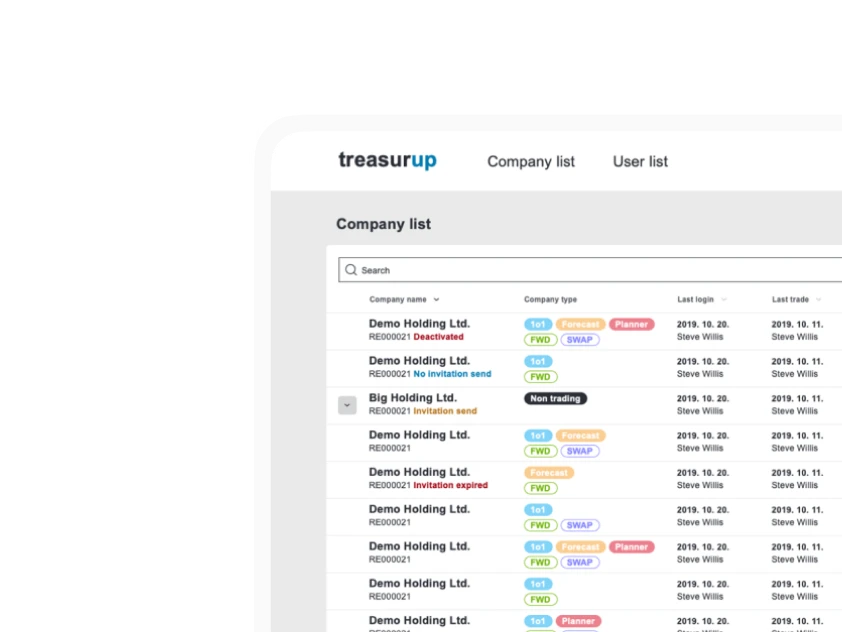
TreasurUp
We established written and visual consistencies and guidelines for TreasurUp’s financial platform.
Simple by OTP
Simple by OTP Bank is Hungary's No.1 mobile payment app for cashless payments with 1M+ downloads, and 1 million+ transactions.

White Label Banking App
We provide full-blown next-generation mobile banking solutions for sales-oriented banks.
Want to read more
about UX, fintech and banking?
Subscribe to our biweekly newsletter and get the latest of our news and thoughts!