Outages as Customer Experience: UX Lessons from Revolut's Disruption
One person stood at a supermarket checkout for an hour, others were stuck at petrol stations after filling up: on 20 October, a power failure in London left Revolut customers across Europe unable to pay for most of the day. Many concluded that neobanks are unreliable, yet Monzo, which has no branches either, built a backup bank for exactly this kind of event. Revolut wasn't prepared: it had no fallback system, its status page showed everything working, and information came late – and product and UX teams at banks have plenty to learn from that.
On the morning of 20 October 2026, a power failure knocked out one of Google Cloud's London data centre zones – and with it most of Revolut's services. Customers of the digital bank, which serves more than 80 million people, were unable to pay by card or make transfers across Europe for hours, with complaints coming in from as far away as Australia and Japan. Many couldn't even log in to the app, and the bank only announced that everything was back to normal in the evening. Afterwards, many people asked whether an app-only bank can be trusted with their everyday finances.
A Zone Went Down, a Bank Stopped
According to Google Cloud's own incident page, the problems in the London region began at 06:08 (UTC). The cloud provider's regions are made up of several independent groups of data centres, known as availability zones, and the power failure affected one of them. Google published its first update more than 2 hours later, named the cause by mid-morning, and had restored services for most customers by 14:00.
At Revolut, the disruption lasted much longer. By 9am, the outage-tracking site Downdetector had logged more than 2,000 complaints, and later the bank's status page showed almost every service as down, from logging in to card payments. According to Reuters, at 17:00 only 6 of the 27 services listed on Revolut's UK status page were still working, among them customer support chat and transfers between Revolut accounts. The bank said in the evening that the problem had been fixed.
Incidentally, Revolut wasn't the only one affected: customers of Lloyds and HSBC in the UK also reported problems, and the outage disrupted several British public services. But Revolut customers couldn't even use their cards in shops, which is rare in a bank outage.
Found Out at the Checkout
Many people took to social media to describe what they went through that day. According to a post quoted by Cybernews, one customer's 71-year-old mother stood at a supermarket checkout for an hour because her card wasn't working, while her son left work and drove 30 kilometres to bring her cash. A customer in Australia wrote from a petrol station: they had already filled up but couldn't pay, so they couldn't get home to their children. They added that they no longer trusted Revolut.
 Many said they couldn't even pay for their morning coffee or lunch
In Ireland, where 3.4 million people use Revolut, many said they couldn't even pay for their morning coffee or lunch. One person got caught out at the supermarket without any cash. Another was annoyed that one of the world's leading card issuers has no backup system. According to one customer, many people were left embarrassed at the till and at first thought their account had been hacked or their money stolen. Someone even claimed to know of a case in which a restaurant called the police on a customer who couldn't pay. Those who could reached for another bank's card – for those who relied on Revolut alone, cash was the only option left.
Green Status Page, Silent Bank
Some customers turned to Revolut's status page to find out what was going on. According to The Next Web, in the morning, when Downdetector had already logged more than 2,000 reports, the status page was still showing all services as operational. Some reports say it took the bank 2 hours to update the page. Meanwhile, the app simply said that something had gone wrong and to try again later.
In the morning, Revolut posted on X that it was dealing with an issue affecting several features, that customers' money and data were safe, and that its engineers were working on a fix. According to the tech site TechRadar, it then issued no further updates until the afternoon. Yet that post contained exactly the information people at the checkout needed: that the bank was having technical problems and their money was safe. But they weren't looking at X – they were looking at a card terminal that only told them their card had been declined.
One customer wrote that Revolut had sent them several emails that week about changes to its terms and conditions and fee increases, but not a single one about the outage. In their view, one warning email would have been enough to stop people panicking when their card was declined and thinking they had been robbed.
The Disruption Outlasted the Recovery
Services were restored in the evening, but the after-effects dragged on for days. For one user, four grocery payments declined during the day all appeared as pending charges at around 10pm. Another customer saw a €90 taxi payment from 17 October, marked as failed at the time, go through the day after the outage, even though they had already paid the fare with another card. A third customer's app wrongly showed their account as overdrawn the next day, with a meaningless value pointing to a software bug where the balance should have been, and their card was declined everywhere – yet customer support said everything was fine.
Getting through to customer support wasn't easy either. One user found that Revolut's support email address bounced their message, saying the recipient was receiving too many emails. A new customer wrote that the app's AI chatbot repeatedly tried and failed to connect them to a live agent, and although they were told someone would join within 23 minutes, they were still waiting 6 hours later. They had planned to use Revolut on a trip abroad, but said their trust was gone.
Two days later, Revolut emailed its customers to apologise. It said the Google Cloud outage had temporarily affected Revolut's features, that money and data had been safe throughout, that the issue had been fixed the same day, and that card transactions made during the disruption could take a few days to show up in accounts. That last point is useful, but it was needed on the day of the outage, when customers didn't even know whether their payments had gone through. The email says nothing about what to do with duplicate or incorrectly displayed charges, whether customers can claim compensation, or what the bank is changing to stop it happening again.
Responsibility Stays with the Bank
The first substantive sentence of Revolut's email names Google as the cause. That is factually correct, but it means little to customers: it was their Revolut card that stopped working, not a Google service. During the outage, Google itself advised affected customers to move their workloads to another zone or region where possible – in other words, it sees surviving the loss of a zone as its customers' job.
Regulators have asked for explanations, but they see responsibility as lying with the banks. In July, the UK Treasury designated the major cloud providers, including Google Cloud's UK entity, as critical third parties, bringing them under the direct oversight of financial regulators. After the outage, the Financial Conduct Authority (FCA) said it was in contact with the firms affected, and Meg Hillier, chair of the House of Commons Treasury Committee, put 9 questions to the Bank of England and the FCA – including whether customers could receive compensation.
In the EU, the European Banking Authority (EBA) requested information from Google. Google Cloud is one of 19 technology providers designated as critical by EU regulators, but the authority stressed that this designation does not relieve banks of their responsibility. As far as customers are concerned, the bank is accountable even when the fault lies with one of its suppliers.
The Neobank Model Isn't the Problem
It is tempting to conclude that neobanks are unreliable. But traditional banks aren't immune to outages either: according to Treasury Committee figures, 9 major banks operating in the UK clocked up a total of at least 803 hours of IT outages over 2 years, and during a 3-day outage at Barclays, 56% of online payments failed. The 20 October failure also hit Lloyds and HSBC, but at Lloyds the problems were mainly with logging in, and both banks recovered sooner. At Revolut, by contrast, the app, card payments and customer support chat all went down at once – and there is no traditional branch for customers to walk into.
 Information has to reach customers where they are
Monzo, another British neobank with no branches, shows that it doesn't have to be this way. In spring 2025, it unveiled its backup bank, Monzo Stand-in: an independent system that runs on Google Cloud rather than on the main platform hosted on Amazon's cloud. If a serious failure occurs, it takes over the most important functions: card payments, cash withdrawals, transfers, checking balances and freezing cards. It was first switched on in August 2024, during a 1-hour outage, and according to the bank, customers were still able to use their money. It was needed again this August. Monzo itself treats it as a last resort, not a replacement for its main system.
The solution didn't even cost much: according to LeadDev, a publication for software engineering leaders, it was built by 6 engineers and accounts for around 1% of Monzo's cloud costs, because it is far simpler than the main system. Its user-facing side matters at least as much: the app regularly checks in the background whether the backup system has been activated, and if so, it switches to a simplified interface offering only the essential functions. In other words, someone had to plan in advance what customers would see and be able to do when the bank is only half working.
What Banks Can Learn
The first lesson from Revolut's case concerns the status page. If it shows green while thousands of customers can't pay, it does more harm than having no status page at all, because it signals that the bank either doesn't know about the problem or doesn't want to talk about it. Status indicators need to be tied to real transaction data, and problems need to be flagged even before the cause is known.
The second lesson is that information has to reach customers where they are. A push notification, a text message or an email can reach someone at the checkout, as long as it doesn't depend on the same system that has gone down. Error messages also need to be precise: “Something went wrong, try again later” is bad advice for a failed payment, because according to Revolut's email, card payments made during the outage could appear in accounts days later, so retrying can mean being charged twice. A good error message tells customers that the problem is on the bank's side, that their money is safe, and what they should do.
The third lesson is that a bank's job doesn't end when service is restored. Handling pending and duplicate charges, incorrect balances and the surge in support requests needs to be planned in advance: it has to be clear who will answer the flood of questions and how, and automated support must still be able to hand customers over to a human. The follow-up email is part of the product too. Revolut did send one, but it would only have been worth something if it had spelled out what happens to pending transactions, where to turn for compensation, and what will change.
The fourth lesson is aimed at app-only banks. With no branch network to fall back on, they have to design their fallback deliberately: deciding in advance which functions must keep working during a partial outage – card payments in shops and checking balances certainly, share trading perhaps not – and testing this regularly. The stakes are high, because one of a neobank's biggest assets is that customers see it as simpler and more reliable than a traditional bank, and a day like this erodes exactly that trust. For Revolut, according to Irish public broadcaster RTÉ, the outage also came on the heels of two data breaches affecting customers. Customers have already drawn their own conclusions. When one person wrote that luckily they had another bank account, the reply was: that's the way to go – don't let everything depend on a single point. Someone else added that they wished Revolut would apply the same principle.
About the authors
Balázs has been working in content for more than 20 years, having the role as an editor at one of the first and largest news sites, later helping to establish the content marketing business for media publishers and agencies. Today, Balázs serves as content producer at Ergomania Ltd.
Related case studies
Prefixbox
Prefixbox is a Hungarian e-commerce scaleup. We helped them design an AI agent that gives more accurate product recommendations to shoppers with generative AI.

Percapita
We designed a full-fledged application for simplifying everyday finances.

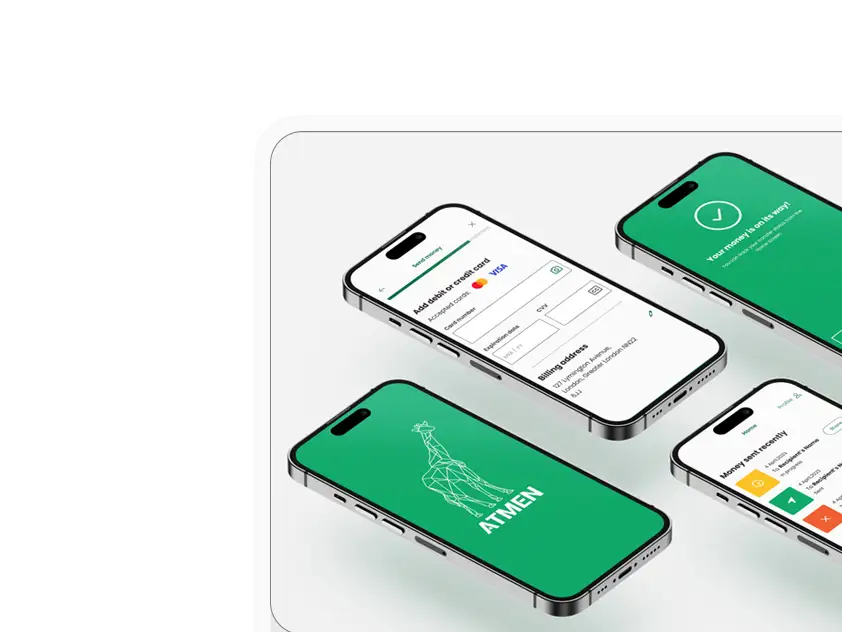
Atmen Fintech
Mobile App
Designing a Minimum Viable Product for a Diaspora Neobank Startup
Sterling Archer
By applying the DDD framework, we created multiple digital tools for a US based Data Company.

Ergomania and NGOs in the Netherlands
UX design for Fintechs, banks and financial startups is the everyday work of Digital Product Design company, Ergomania based out of Budapest, Hungary.

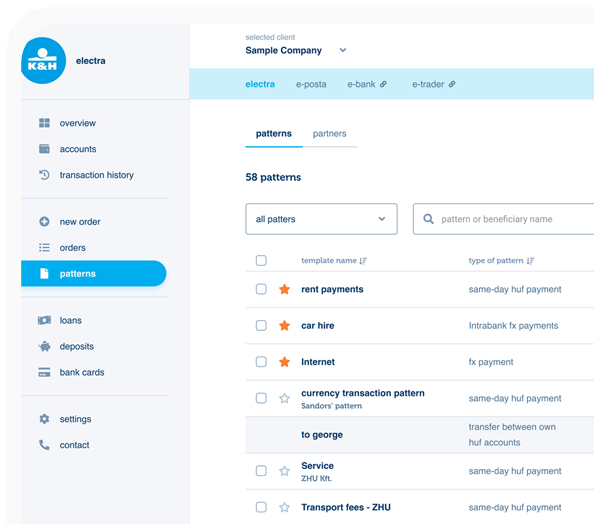
K&H Bank's Corporate Netbank
The K&H Electra Netbank App consolidates all financial needs into a single, user-friendly application. With its intuitive design, businesses can effortlessly manage their company's cash flow, transactions, and investments from one centralized hub.
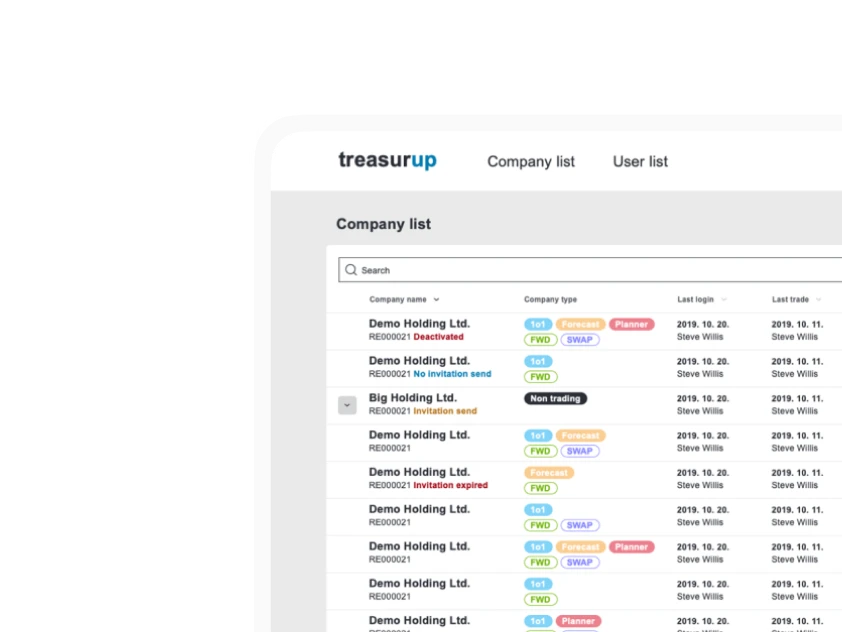
TreasurUp
We established written and visual consistencies and guidelines for TreasurUp’s financial platform.
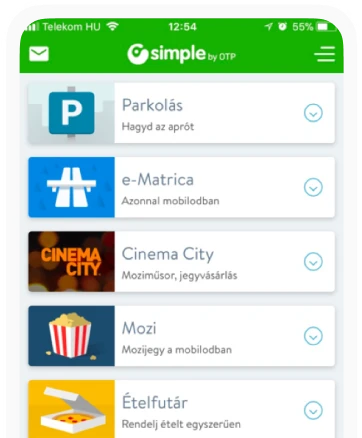
Simple by OTP
Simple by OTP Bank is Hungary's No.1 mobile payment app for cashless payments with 1M+ downloads, and 1 million+ transactions.

White Label Banking App
We provide full-blown next-generation mobile banking solutions for sales-oriented banks.
Want to read more
about UX, fintech and banking?
Subscribe to our biweekly newsletter and get the latest of our news and thoughts!